Today’s fixed-income environment offers an attractive opportunity to emphasize credit income while maintaining greater control over interest-rate risk. With income still compelling and economic growth remaining resilient, investors may not need to extend maturity to pursue attractive return potential. Short duration high yield offers a way to potentially capture the benefits of credit while limiting exposure to longer-term rate movements and duration-driven volatility.
Putting Credit to Work
The distinction between credit risk and interest-rate risk is increasingly important for fixed-income investors. To pursue additional income, investors do not necessarily need to extend maturity and take on greater exposure to longer-term rates. A shorter-duration approach helps investors to be more deliberate about where they take risk—emphasizing credit income and security selection rather than relying on duration to drive returns.
That approach can be particularly relevant when inflation, fiscal policy, economic growth, and other structural forces help to create uncertainty around longer-term interest rates. By keeping maturities shorter, investors can potentially remain invested in higher-income high yield credit markets while mitigating exposure to interest-rate sensitivity. The result is a portfolio that can be positioned more deliberately around its intended sources of return. Rather than relying on duration to drive performance, short duration high yield places greater emphasis on coupon income, credit spreads, and fundamental security selection.
Why Short Duration High Yield?
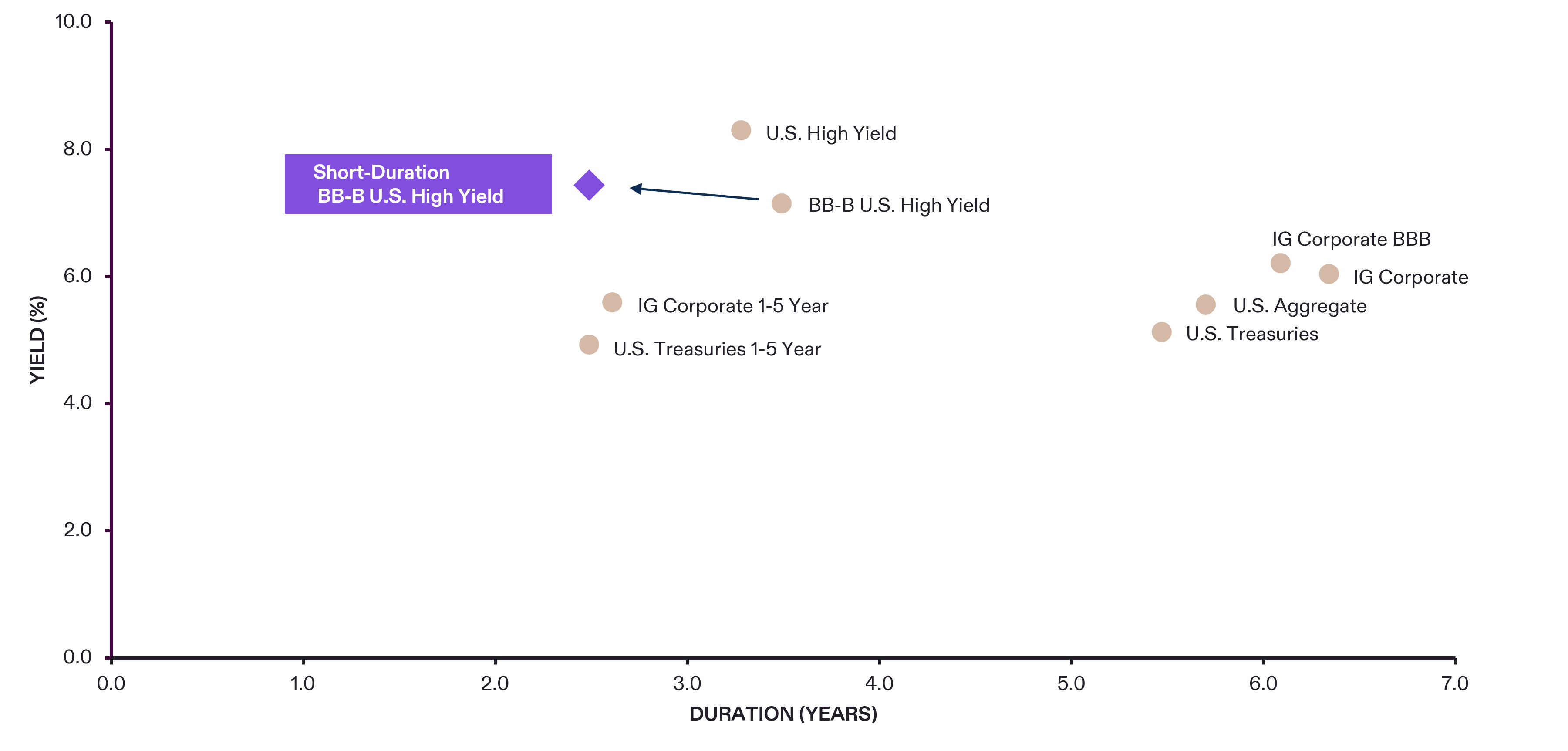
High yield has long been an important source of income and return within fixed income. At the same time, broad high yield carries greater interest-rate sensitivity than a portfolio focused on shorter-maturity securities. The question for investors is whether they can capture much of the credit opportunity without taking the full duration exposure of the broader market.
Short duration high yield can help address that trade-off. As bonds move closer to maturity, their prices generally become less responsive to changes in interest rates. Meanwhile, the relatively high income generated by the asset class provides a meaningful contribution to total return. The result is a portfolio that can rely more on income and credit selection and less on duration-driven price movements.
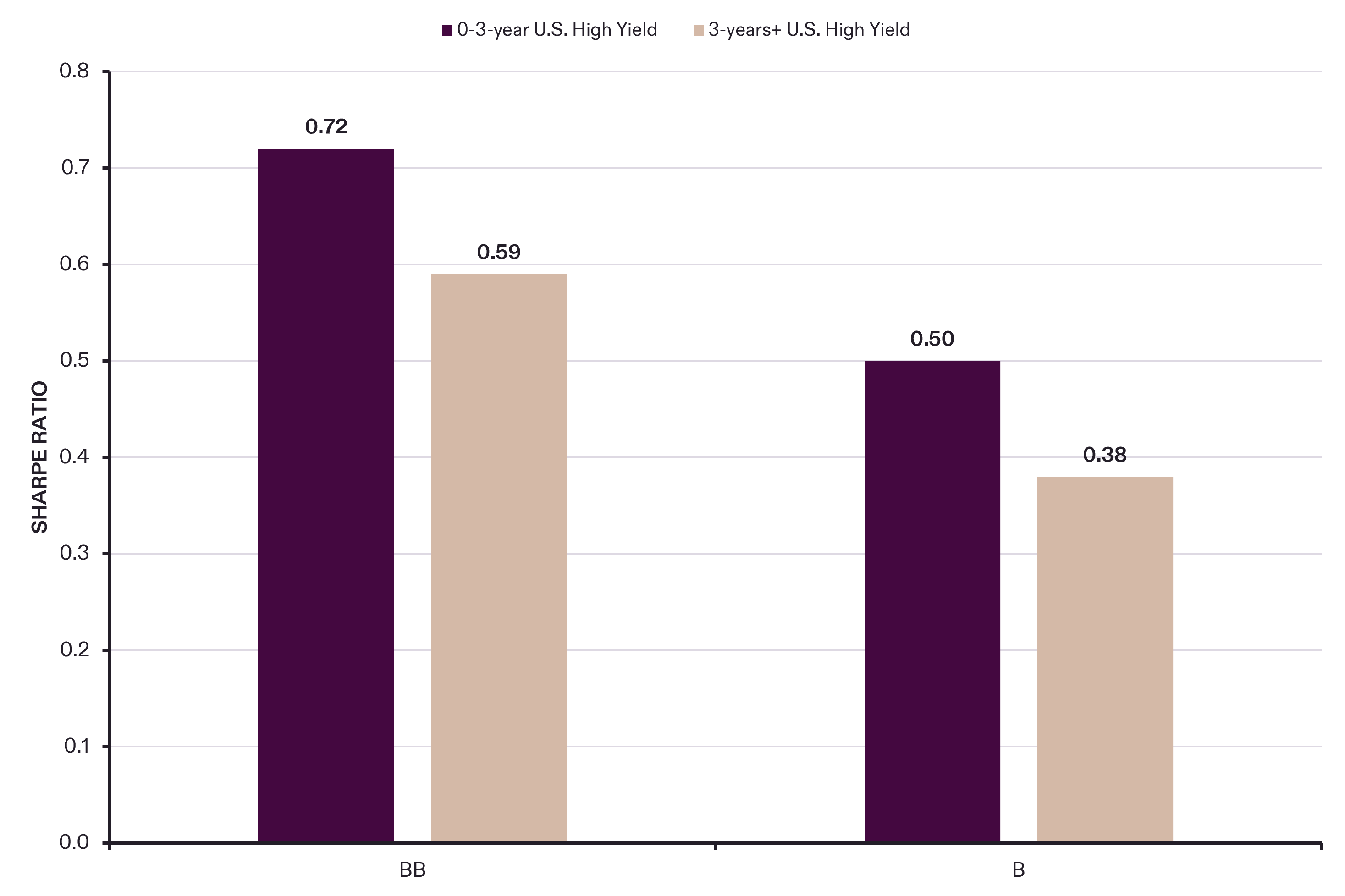
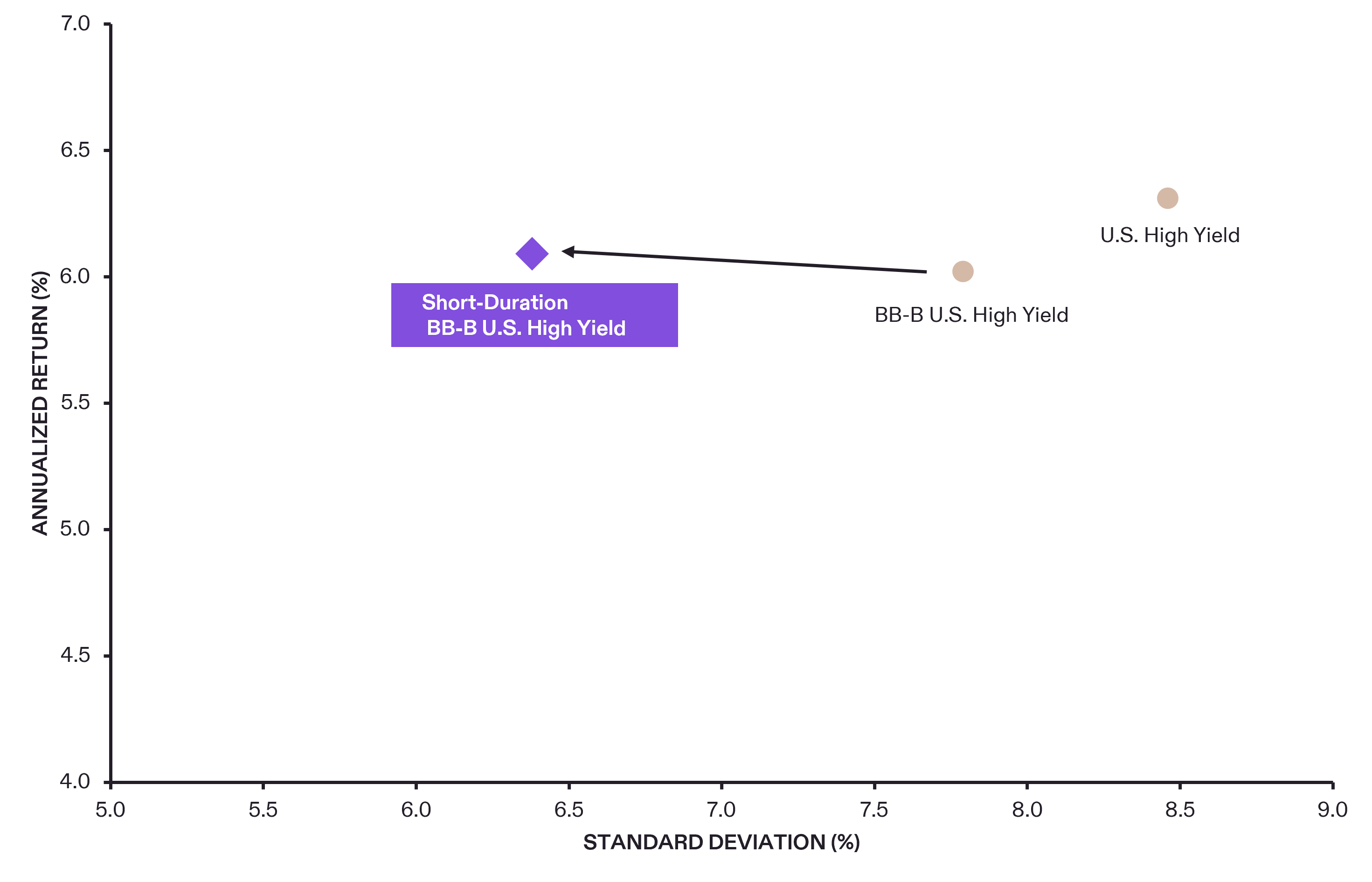
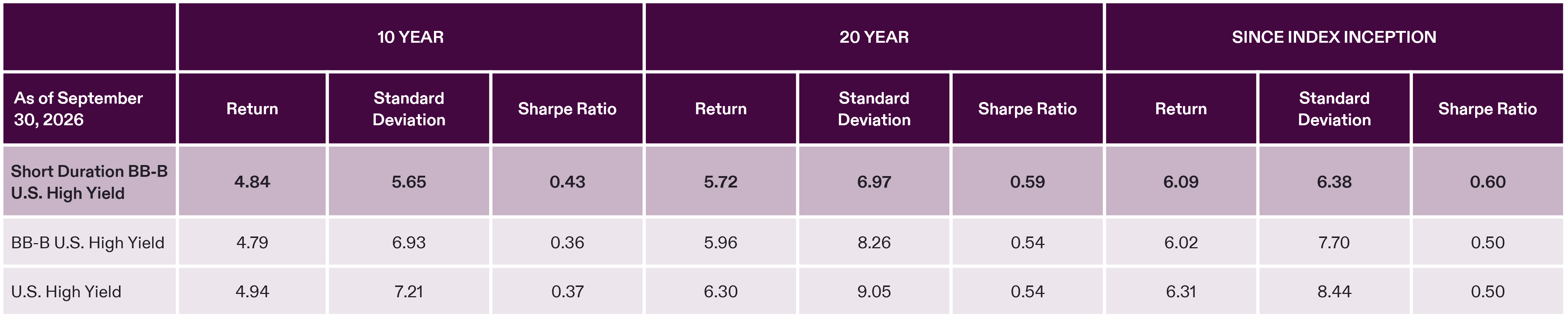
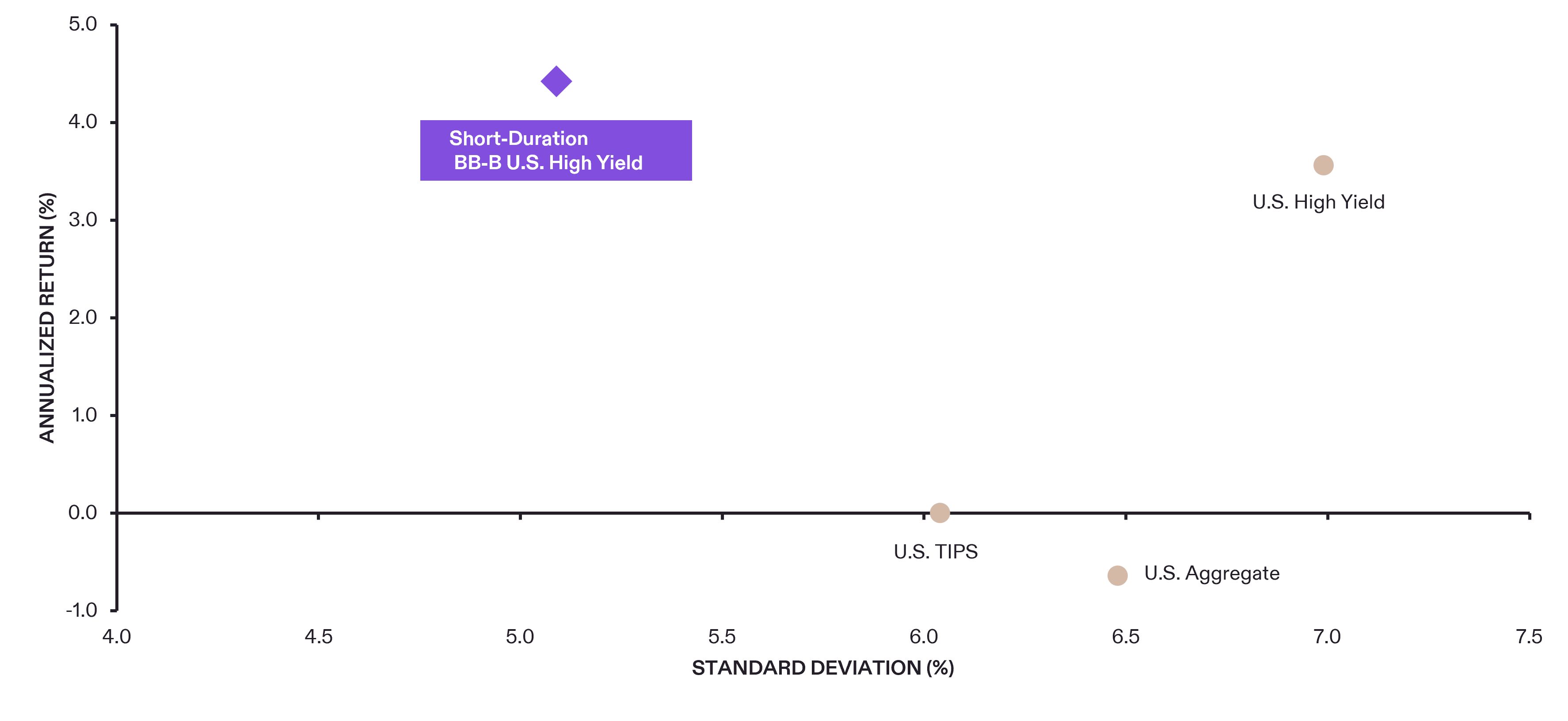
The combination of a shorter maturity profile and higher income can help reduce overall return volatility. Less duration-driven price sensitivity can cushion the impact of rate movements, while a larger income contribution can support total returns. Over time, this combination has produced a more attractive risk-adjusted outcome compared to longer-duration high yield, as shown in Figure 1.