June Fed Meeting: Policy Signals from the New Chairman

A summary of the latest FOMC policy decision, economic backdrop, leadership transition, and what it may mean for portfolios in the new Warsh era.

This is a marketing communication.

The U.S. Federal Reserve’s (Fed’s) June Federal Open Market Committee (FOMC) meeting marked an important policy moment under new Fed Chair Kevin Warsh. As widely expected, the FOMC, the policy setting arm of the Fed, held the target range for the federal funds rate steady at 3.50% to 3.75% on June 17. While the rate decision came as no surprise to financial markets, the more notable developments were the tone of the policy statement, the updated economic projections, and Chair Warsh’s initial signals about how he may lead the Fed.

A Shorter Policy Statement and Minimal Forward Guidance

The June policy statement was much shorter and simpler than statements over the last eight years. It included the rate decision and a brief assessment of the economic and inflation outlook but removed much of the forward guidance markets had long become accustomed to.

In his post-meeting press conference, Chair Warsh indicated that the Committee had discussed forward guidance and concluded that it may no longer be helpful in the current environment. That suggests markets may need to rely more heavily on incoming data and less on explicit guidance from the Fed.

The statement also leaned hawkish, describing the U.S. economy as solid, acknowledging uncertainty, and remaining clear that inflation is still above the Fed’s 2% target rate. The Committee also emphasized its commitment to restoring price stability.

Assessing The Dot Plot

The updated Summary of Economic Projections (SEP) also drew market attention. Chair Warsh did not submit his own expectations about the fed funds rate, (a “dot” in the dot-plot survey of FOMC members), consistent with his previously expressed skepticism about the SEP and dot plot framework. However, the other 18 Committee participants did submit projections, and those dots shifted in a more hawkish direction. Several participants projected at least one rate hike by the end of 2026, while only one participant projected a rate cut. That moved the median dot higher compared with the March 2026 projections, when the median still implied a cut by year-end.

At the same time, the projections were more nuanced than the immediate market reaction suggested. While the 2026 dots showed the possibility of near-term tightening, the 2027 and 2028 projections suggested that some of that tightening could later be reversed. In other words, the Committee seemed to be acknowledging a potential near-term inflation challenge but not necessarily signaling the start of a sustained hiking cycle.

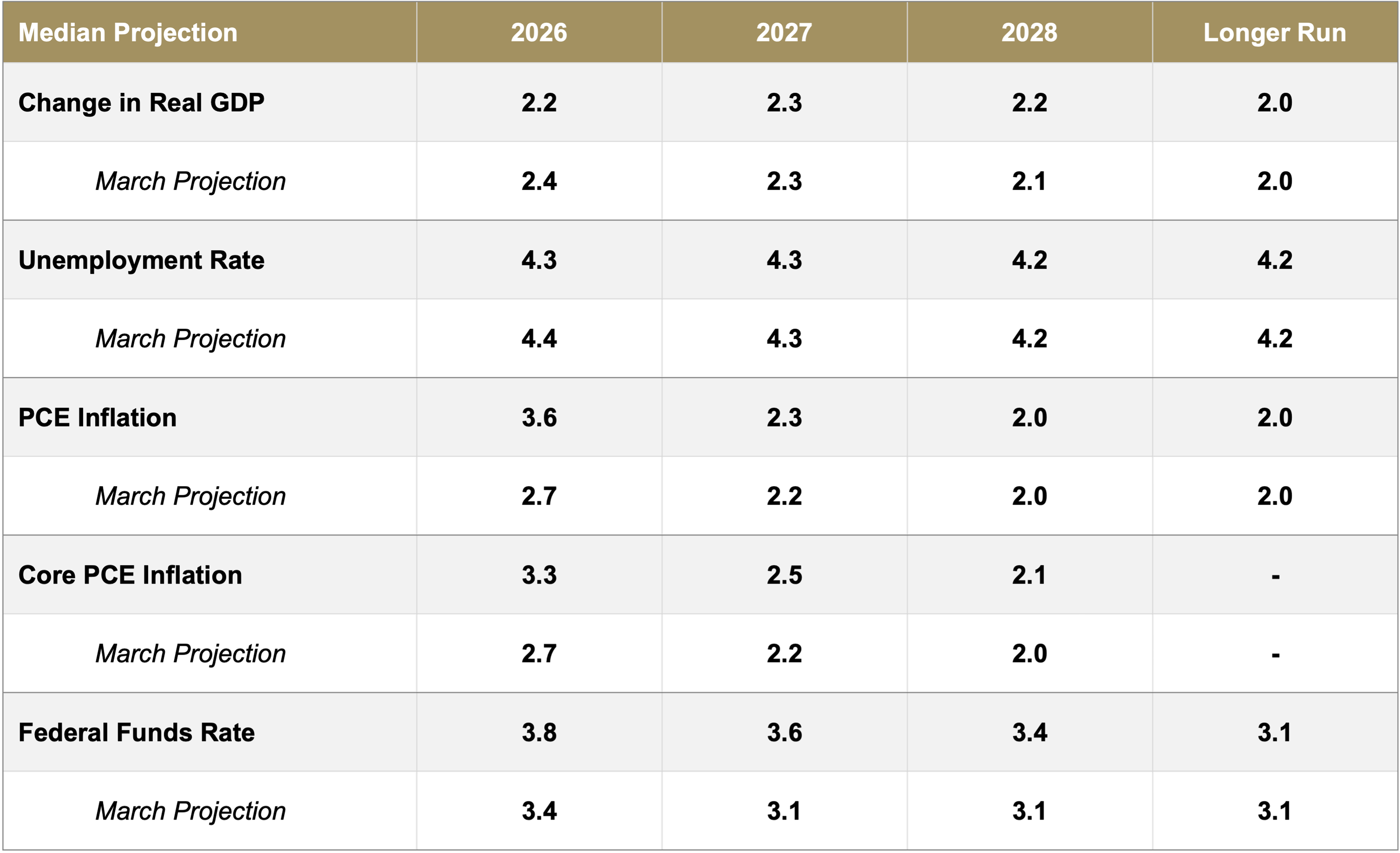
Figure 1. Fed Dot Plot Suggests a Near-Term Hike Then a Reversal Ahead

line chart with dots showing Fed Dot Plot Suggests a Near-Term Hike Then a Reversal Ahead
Source: U.S. Federal Reserve. Data as of June 17, 2026. The Fed’s dot plot shows where each Fed official expects interest rates to be in the future. Each dot represents one official’s projection. For illustrative purposes only and does not represent any specific portfolio managed by Lord Abbett or any particular investment. 

Inflation Remains the Most Important Issue

FOMC members’ inflation projections also moved higher, as shown in Figure 2. The Fed now appears to expect inflation will remain elevated in the near term before moderating next year. If inflation pressure remains in areas such as energy, goods, or artificial intelligence (AI)-related investment demand, monetary policy has limited ability to directly address those pressures. However, if inflation pressures develop due to wages, housing costs, or core services, the Fed may have a stronger case for additional tightening. For now, the labor market appears resilient but not inflationary. Payroll growth has remained solid, unemployment remains low, and consumer activity has held up. That gives the Fed room to wait, but it also reduces the urgency to cut rates.

Figure 2. A View of the Fed’s Summary of Economic Projections

Chart with the Fed’s Summary of Economic Projections
Source: U.S. Federal Reserve. Data as of June 17, 2026. The Summary of Economic Projections (SEP) is a report published by the Federal Reserve that provides FOMC participants’ forecasts for key economic variables over the next several years and the longer run. For illustrative purposes only and does not represent any specific portfolio managed by Lord Abbett or any particular investment. 

Five New Task Forces to Study Policy Framework

One of the most important announcements from Chair Warsh was the creation of five task forces, each designed to review key parts of the Fed’s policy framework and operating approach. Importantly, Warsh was clear that the Fed’s 2.0% inflation target is not up for debate. The five task forces are:

Fed Communications: This group is expected to review how the Fed communicates policy decisions, economic assessments, and the outlook for rates. Any changes here could have meaningful implications for market expectations and rate volatility.

Inflation Framework: This task force will examine how the Fed thinks about inflation dynamics and the tools available to return inflation to the 2% target. The Fed may reassess how it evaluates inflation shocks and the path back to price stability.

Balance Sheet: This group will focus on the Fed’s balance sheet and its role in monetary policy. Its work could affect liquidity conditions, reserve management, and the broader transmission of policy through financial markets.

Data and Methodology: This task force will review the data sources and analytical methods the Fed uses to assess the economy. That could be relevant in an environment where inflation, productivity, labor markets, and technology are changing quickly.

Productivity and Jobs: This group will examine labor-market dynamics and productivity trends, including the potential effects of AI and other structural changes.

These developments suggest strongly that Chair Warsh may be preparing for a broader review of how the Fed operates, communicates, and evaluates the economy. That process may take time, but it could be important for investors if it leads to less forward guidance or a different approach to policy signaling.

Rate Volatility May Shift Higher

One important market implication of the June meeting was the potential for higher rate volatility, particularly at the front end of the Treasury yield curve. If the Fed provides less forward guidance under Chair Warsh, markets may become more sensitive to incoming data and policy surprises. That could lead to larger moves in shorter-maturity yields as investors reassess the timing and probability of future rate hikes. At the same time, longer-maturity yields may remain more contained. If markets believe that any near-term tightening could eventually weigh on growth, the back end of the curve may continue to find support.

The immediate market reaction following the meeting was hawkish. The two-year U.S. Treasury Bond yield moved sharply higher; the U.S. dollar strengthened; and equities came under some pressure. The market also began pricing a higher probability of rate hikes over the coming months. We believe that reaction may have gone somewhat beyond what the Fed actually signaled. The Committee has clearly moved in a more hawkish direction, but it remains divided. The data over the next several weeks will be important in determining whether the Fed ultimately needs to tighten further or can remain on hold.

Investment Implications and Portfolio Positioning

We believe the broader economic backdrop remains supportive for fixed income, particularly credit and a multi-sector approach, but selectivity is critical. The economy continues to look resilient, supported by solid earnings growth, a durable labor market, and a consumer that remains in relatively good shape. That combination may continue to support spread sectors and carry-oriented opportunities.

At the same time, valuations remain tight, so this does not appear to be an environment for indiscriminate risk-taking. We believe the opportunity is to lean into high-quality carry, while remaining disciplined on issuer and security selection. That means looking carefully across companies and industries to identify those that may benefit from the current environment, including structural themes such as AI, while avoiding those that may be more vulnerable.

On the rates side, the shift in Fed communication could be important. If Chair Warsh’s Fed provides less forward guidance, front-end rate volatility may remain elevated as markets respond more directly to inflation data, labor-market trends, and policy signals. Longer-term yields may remain more range-bound, particularly if investors believe any near-term tightening would eventually weigh on growth. Overall, we believe portfolios should remain constructive but disciplined, keeping risk on where fundamentals support it and emphasizing quality and security selection.