Andy D’Souza: Welcome back to The Investment Conversation. I'm Andy D'Souza, partner and chief marketing officer here at Lord Abbett. As part of our 2025 Midyear Investment Outlook, we're going to talk with our investment leaders about key themes for the markets in the second half of the year across equities, municipal bonds, taxable fixed income, and private credit.
Today, I'm going to speak with our head of private credit, Steve Kuppenheimer, who’s a partner at Lord Abbett. Steve, glad to have you here today.
Steve Kuppenheimer: Glad to be here, Andy.
D’Souza: Steve, last December on the podcast you and I discussed the dynamics of the alternative asset class of direct lending. And since then, the market continues to evolve and it’s definitely different than it was then today. There's been a lot of questions around the impact of higher rates on direct lending, some uncertainty over the level of growth expected in the second half of 2025. Could you just talk to us a little bit about the environment today compared to maybe six months ago or even a year ago, and how competitive landscape has changed in that time?
Kuppenheimer: Happy to, and maybe we can talk about what is the same or similar as it was half a year ago and what's different. Probably most notably we should talk about “Liberation Day” [the April 2 tariff announcement by the White House]. That's probably the most notable event for most markets over the last half a year, and we can talk about what the impact of that has been on the direct lending markets.
Overall, maybe like other products, I think we saw an initial surprise and some volatility in the direct lending markets, and I'll define that shortly because that term manifests itself differently, I think, in a lot of alternative asset classes.
And then, up until now, since Liberation Day you've seen moderation of that volatility in largely a retracing of steps back to where things were kind of pre-Liberation Day. But that's an oversimplification. I think we should unpack that a little bit.
So, first of all, in terms of when you have a market surprise similar to that in the private credit markets, the first thing that happens is the markets really just kind of slow down. So, if in the liquid markets you're able to see prices widen out before your eyes, in the more private markets, the deals that are trying to come to market at that time tend to just go on hold.
And the market participants say, "We don't know the impact of this announcement or this policy change. Why don't we just go pencils down for a while and see where things go?" Interestingly in this case, that didn't last very long. I would say for a couple of weeks that was the impact, but pretty quickly you started seeing sponsors and potential borrowers testing what was possible to do, even shortly after Liberation Day.
And, of course, what is the question then? The question is what is the impact of tariffs on a given potential borrower's financial ecosystem, and how would that impact you as a potential lender to that company? And there were some strong companies that had, let's say, not that much exposure to manufacturing, not that much exposure to manufacturing outside of the U.S.
That made a strong case for coming to market. And you saw deal flow return, I would say, fairly rapidly. You did see some spread widening and, again, there's more nuances than that in the private credit markets. It's not just all about price.
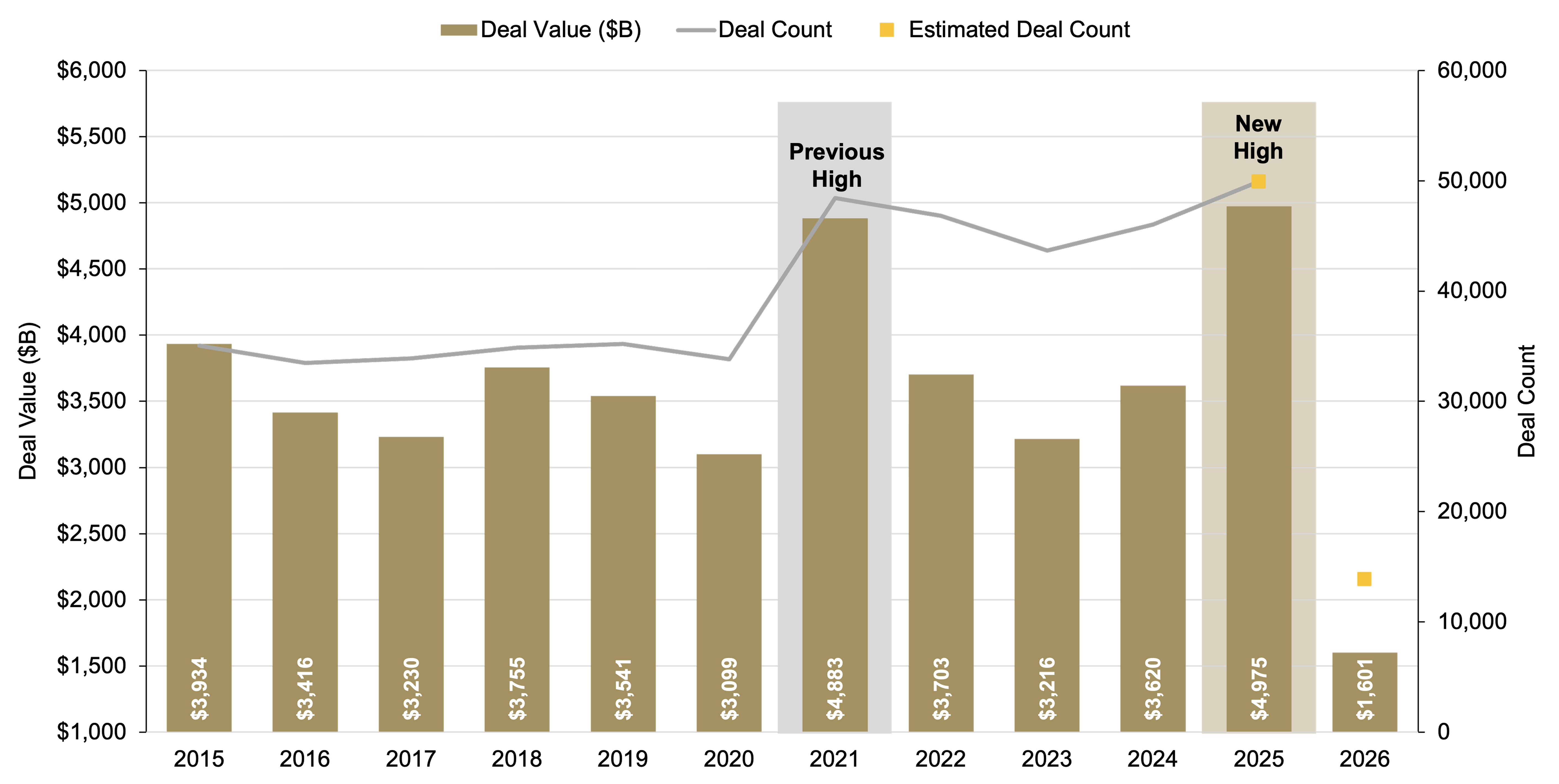
Now, let's talk about what's similar over the last six months. I would say we remain in a slower deal environment. And so, when we spoke last time, I think we talked about how the market was anticipating a material increase in deal volumes post-January 1 with the new administration.
And I think this is old news at this point, the new administration surprised the world, really, with some of its policies around tariffs, and that's actually had a chilling effect on markets, at least in the short run. And that continues today. We were always of the mindset that the deal activity wouldn't really thaw on the lending side until the third or fourth quarter.
We remain of that mindset. In fact, I'd probably push it out a quarter, and we'd say it's probably the fourth quarter. And the reason why I say that, Andy, is once owners of enterprises decide that the water's nice and they want to explore really executing on a strategic transaction, whether that's selling or whether that's buying a competitor or some other strategic transaction that requires capital, they then start to talk internally, then they bring in advisors like investment banks, then they start to talk to potential equity counterparties.
That's all before they get to the lending side of that. So now I do think the market is showing some calmness. I do think people are coming back to the table. We're already starting to see that in our pipeline, and I know the market is probably seeing similar things. But I still think a real thawing out is probably closer to the end of this year.
D’Souza: When we spoke last time, there were a lot of articles in the press around the rebirth of M&A [corporate mergers and acquisitions], or the M&A waking back up again going into the new year, the new administration coming into play. Are you saying this was not manifesting itself or not showing itself even before Liberation Day?
Kuppenheimer: No, I think Liberation Day did change that. I think that it was just taking some time, but it's a fair question. I would say what the markets want most is certainty or comfort, predictability. And I think starting in January, again, the owners of companies who make the decisions about to do these transactions or not, they were coming back to the table, they were exploring things in earnest.
But that does take a little while to kind of flywheel and turn into executable transactions, and it was kind of in that time period that the change in policy on tariffs occurred. And I think it kind of brought volatility and uncertainty back and delayed deal flow.
Now let me talk about why that's a positive as an investor in the space. I think we kind of needed some volatility. In fact, I'm hopeful for a little bit more, to be honest with you. Not that I want more tariffs, but I do think that the credit markets have been benign for an extended period of time, and that tends to lead to less differentiation in pricing of risk.
It tends to lead to a little bit less discipline on what deals get done in the market, because there's less of a fear element so you have more capital that maybe doesn't specialize in private lending trying it out. And so, with some volatility (and we did see this in the wake of Liberation Day even though it wasn't long-lasting, at least not yet) you did some more discipline being brought back on pricing.
So, deals getting priced with different levels of spread, more reflective of their risk profile. And you have seen kind of some of the more “tourist” participants maybe being slower to participate. So, I think it's been healthy and that's kind of the good side of this.
D’Souza: Gotcha. And if you go back to your experience (and we talked on our last podcast about your experience during the financial crisis), you've seen a lot of different episodes of volatility in the markets, and the market has evolved since then. Obviously, we can talk about that. But how would you sort of put this in perspective to historical volatile times in the marketplace, what we've seen in the last few months?
Kuppenheimer: I'd say it's very moderate. And all these events are differentiated from each other. They're hard to categorize, but I would still say it's a pretty moderate outcome. If you look at the U.S. economy overall, somewhere around 65% to 70% of the companies in our economy are service-based, which isn't really the focus of the tariffs to begin with.
So, the tariff is really focused on manufacturing. You're already talking about a smaller subset of our economy historically. So, you could look at your portfolio or look at a new opportunity from that lens, and ask yourself, “is this something that's really going to be materially impacted by this change in tariff policies?”
And it's not as simple as just what does this company do, because they might have suppliers, or they might have customers that are going to have, in effect, less U.S. dollars to spend, or have more tariff-impacted dollars. And so, it's a nuanced analysis.
But I do think one of the differences here is that you can kind of look at things as service versus manufacturing type companies, and that's one of the kind of bigger differentiations you can make right away. I'd also say in terms of the timing of the uncertainty, again, we have to give everything a grain of salt here because this is still a moving situation, but it does seem like the peak of the volatility was not as long-lived as other cases.
If we look at COVID, for example, which was not an immediate clear economic cycle, but resulted in a pullback of economic activity and fear that then had an economic outcome, I think that the fear there, longer standing and potentially deeper impact. But even there you could see that as, in my mind, more of a test of volatility and liquidity than it was a real credit cycle.
D’Souza: If you think about the market in terms of payment in kind, or PIK, in the market these days, everyone sort of quotes those percentages and they say they're going up versus historical levels, and maybe some people say it's a bad thing or a negative thing or something to watch out for. What's your take on PIK these days, and how do you kind of define that and think about it?
Kuppenheimer: Well, PIK is simply, as you mentioned, payment in kind, so it's an investor capitalizing some or all of their interest. So they don't make all of their interest payment in a given quarter and the amount that they don't make gets added to their principal, and so they're then paying interest on a higher principal amount over time.
It's generally a credit negative. It shows that the company's tight on liquidity, otherwise why wouldn't they be paying their interest down? But there's some examples of companies, let's say, a high-growth software so that's got a terrific product, terrific customer base that is growing, but they may be pre-profitability, that's a case of a company that you may be excited about as a lender and intentionally want to scale the amount of interest they have to pay you currently as they kind of grow into the loan.
But that is more the exception than the rule. In general, a company not being able to pay all of its promised interest currently is a sign of maybe a liquidity issue or some sort of stress, especially if it's happening post-closing. I think why you're hearing about it now is the amount of PIK outstanding in existing portfolios has crept up some.
D’Souza: What do you mean outstanding?
Kuppenheimer: So, if you look at existing portfolios of direct lending that are visible because they're in publicly filed companies like BDCs [business development companies], and so they have some visibility to them, you're seeing the percentage of those portfolios that have some PIK element increase.
D’Souza: So maybe a question then, in general terms, very vague numbers, but what percent of these middle market loans would have PIK ability in the documents that maybe haven't necessarily utilized them, or some do, some don't? But, generally speaking, are those terms that everybody has access to when they're working through the documents?
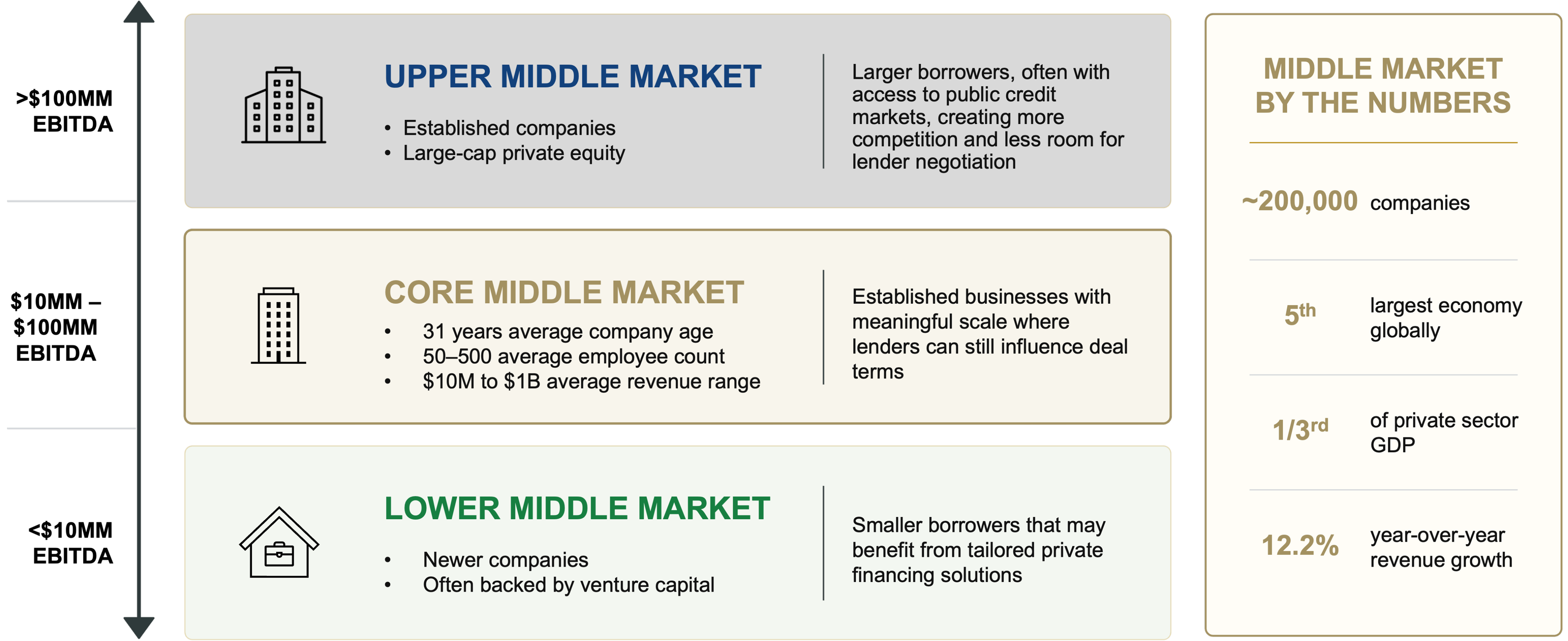
Kuppenheimer: No, I don't think so. I think this is another topic that correlates with the large end of the private credit markets versus the traditional kind of part of the middle markets where it's far less common for a company with $50-$60 million of EBITDA [earnings before interest, taxes, depreciation and amortization] to have PIK ability than it is for a company that's got hundreds of millions of EBITDA and they're deciding between borrowing money from the liquid markets or from the private markets, and if the private make solution's going to win out it will have to compete on structure, including PIK ability. And so, it tends to be more weighted towards that end of the market, but not entirely so.
D’Souza: Got it. And so, I think we've seen, similar to your point, public filings of investments that have gone more upscale or upmarket in terms of the EBITDAs that they're dealing with, that's maybe one reason why you're seeing a higher level of PIK in the marketplace overall, roughly speaking.
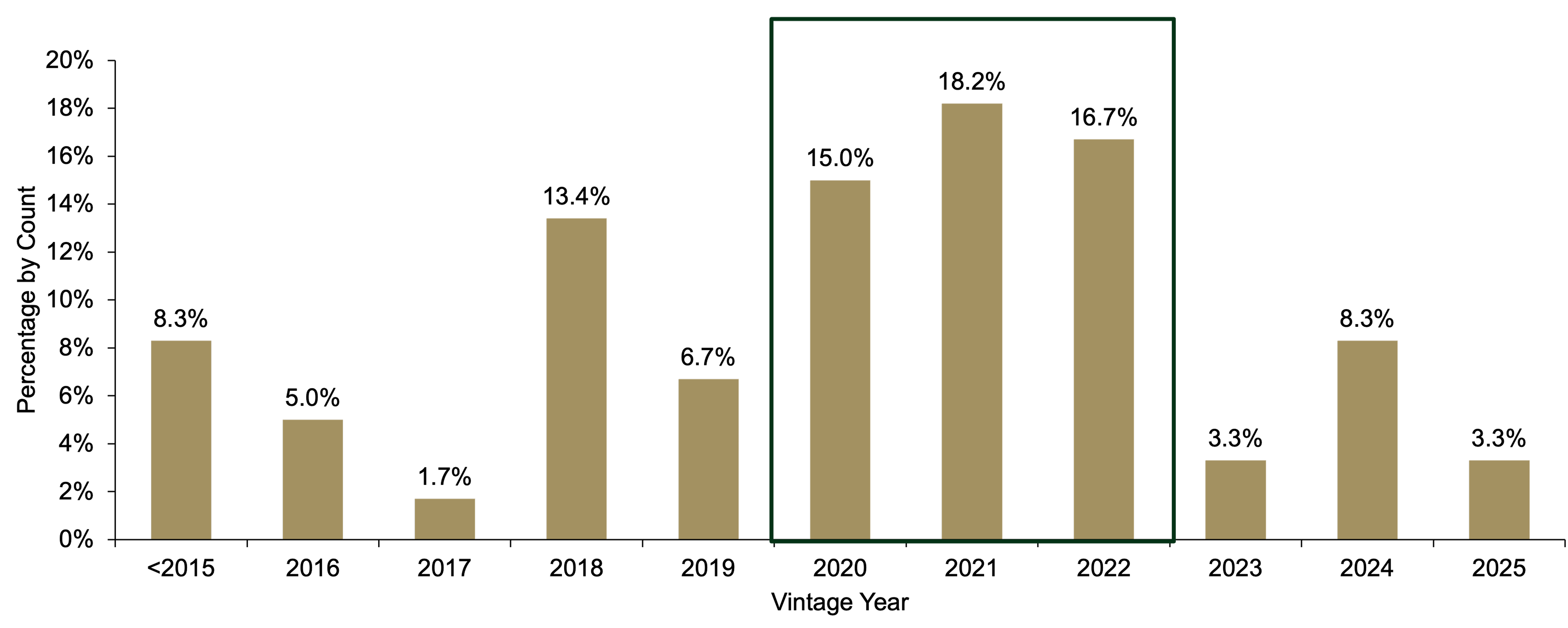
Kuppenheimer: Yeah, I think so, and I think it really correlates to if you look at the last few years of investment activity, what that has been bunched around. So as COVID thawed out, so getting towards the end of 2020 and throughout 2021, there was really an enormous amount of private lending, corporate lending that occurred at that time, and base rates were extremely low, as you'll remember. They were 25 basis points, roughly.
And so, you saw an immense amount of lending, and this is all lending on a floating rate basis, and those loans have a six- or seven-year legal life. So, the loans were made when LIBOR or SOFR was 25 basis points, and then you had those rates go up by 500 basis points during the life of the loan. And that's why I think you're starting to see an increase in PIK today. Tends to be in those more legacy loans that were underwritten at a much lower base rate environment.
D’Souza: So, this is effectively one of the outcomes or outputs of your idea of more differentiation in the marketplace as things get a little more difficult?
Kuppenheimer: I think that's right, Andy. I think that as the credit cycle continues to evolve, that is really where I think you'll see differentiation in portfolios and across managers. That's really where the discipline of underwriting will come to the fore.
D’Souza: Yeah, because to your point, you saw pretty substantial increase in those rates that they're paying in terms of the borrowed funds. Are there other signs that concern you or that give you comfort in the marketplace these days as we're going through the cycle here?
Kuppenheimer: Well, certainly I think that the performance that you've seen for years now, including post-COVID, has really held up. And then I'll talk about things that do concern me. But I would say if we start very big picture, if you look at the visible total returns across the direct lending market, they've been stable, and they've largely held up.
That doesn't mean there's not reasons to be concerned, but you'd be remiss not to focus on that. I don't think there's enough kind of statements to that effect where the actual performance of the product overall has been very stable and very strong.
But now, if we want to talk about things that concern us, I think PIK is one. LME, liability management exercises, something else you and I have talked about in the past. I think that's another one, and it's another kind of nuanced topic.
D’Souza: Anything in LME these days? I know there seems to always be sort of this cat-and-mouse game where things pop up and there's other ways to sort of get around things or to interpret certain things in clauses and documents. Is there anything new or newer these days that's coming up in the LME conversation?
Kuppenheimer: It's always evolving, to your point, Andy. I would say a couple developments that I touch on, one, the U.S. Fifth Circuit Court overturned the Serta bankruptcy structure on New Year's Eve of 2024, of all days. And there's been one or two other court cases that have been minority-lender friendly.
There's also been one or two court cases that are majority-lender friendly. But that case law is helpful because it does bring some more clarity and maybe rules of the road that just didn't exist before. So, to me, the most notable dynamic there is how we've always viewed LME, which is you can't look at it as a negative surprise.
I think the press around LME over the last several years has been really describing what is a negative surprise. So, lenders thinking that they're all at the same level, some of them learning that all of a sudden they're not at the same level and not expecting that.
And in the early days of this (and this is another kind of child of COVID and the larger borrowers being able to get more document flexibility in order to issue a private loan), but you've seen I think now more intent around LME.
What I mean by that is I think now there's more certainty around what language you need to have or not have to have protections and it’s now being more specifically negotiated for. Versus before I think there was a little more of a "gotcha" element, a little bit more of a negative surprise, as I mentioned before. And I do think as there's more rulings, as there's more negotiation, you are seeing more discipline and maybe more kind of clear lines in the sand.
D’Souza: So, a little more eyes wide open going into--
Kuppenheimer: I think so--
D’Souza: --the process here. Again, the Serta Fifth Circuit outcome, to the listener at home or to most people on the planet, what's the key takeaway there in your mind, if someone said, "What does that actually mean for the market?" You kind of went through it a little bit there, but if you had to give a quick takeaway from, "What happened on New Year's Eve was really relevant and important to the private credit market because--"
Kuppenheimer: Well, I think I'd answer it in two ways. If I try to keep it big picture, to your point, of kind of a broad audience, I think that what it means is the courts will look at the spirit of the agreement more. And if the spirit of the agreement is that these lenders are supposed to be treated equally, they're looking for a reason to reach that conclusion.
At the same time, it was a specific ruling having to do with a specific provision in the Serta documents about a market transaction. But I think that's, in a way, the more nuanced point that isn't the main takeaway. I think the main takeaway is that there is a view towards operating within the spirit of the documents and the notion that these lenders are supposed to be treated equally.
D’Souza: Thank you. We also have touched on over time the relationship between the banks and private lenders. Has that evolved or changed at all in the last six months?
Kuppenheimer: I don't think in the last six months it's changed much, Andy, but always happy to touch on this topic. I think it continues to be a very collaborative space despite some of the articles that I see that talk about direct lending taking market share away from banks and banks fighting it.
I think that that's true on the margin, but largely what you see in the direct lending space is lending that is not terribly bank-friendly on its own that is better suited to be out of depositors' hands and more into kind of real risk-takers' hands in the form of private credit funds, BDCs, other types of structures.
And at the same time, the banks have remained extremely relevant to the space by being the financing counterparty for the strategy. So they're, in effect, in a diversified second loss position, and I think that that is incredibly bank-friendly on a risk adjusted basis for the bank balance sheets. You are seeing some of them now have more dedicated capital for the larger direct lending deals as well, and that'll be interesting to see how that plays out. But largely, it remains a pretty collaborative relationship overall.
D’Souza: Let's talk about the Fed [U.S. Federal Reserve].
Kuppenheimer: Let's do it.
D’Souza: All right. So, the market expects some [rate] cuts later this year, at this point in time at least, right? How does the prospect of lower rates affect current deals that are in process now, and just your thoughts overall there?
Kuppenheimer: So, I guess a couple of things. So, I look at rates for this strategy more as a symptom or an outcome of the overall health of the economy (in other words, more of a macro [consideration]), rather than, “is that going to make specific portfolio management decisions different?”
And I think I'm answering your question, but what I mean by that is this is a strategy that is typically modestly levered, and the leverage that is used is typically floating rate itself. So, you're kind of match funded. So, if rates go down, your portfolio is floating rate loans generally, so they adjust.
The debt that we borrow to finance our strategy is also floating rate, so it adjusts with it. And so we're not really looking to time rates in the strategy generally. That being said, like I said before, rates as indicator of economic activity and health are relevant and we do kind of look at it tends to be a lagging or rearward-looking indicator, but it can have a forward impact. So, if rates are cut lower, optimism around future economic activity goes up. If rates are frustratingly high, then our underwriting case might be a little bit different.
D’Souza: We still hear a lot about the constant convergence in the marketplace--
Kuppenheimer: Of course--
D’Souza: --and it continues to evolve, as this market does, and we keep saying that. A number of borrowers are staying private longer or toggling between the two, in some cases, tapping both markets at the same time, even as part of the same issuance. Is the trend getting stronger? Is it changing at all? What do you see here?
Kuppenheimer: I think it's only getting stronger, and I think what is happening is I think two pretty distinct markets, even though there is convergence-- and so maybe I'll use the word differently here in that I think private investing and capital markets tools, whether it's direct lending or ABF [assert-backed finance] or real estate, other private products you're aware of, those evolving in terms of the capital base they have, the sophistication of the structures, the flexibility they can provide to potential borrowers, that's going one direction, which is increasing.
And I think that the traditional liquid solutions to large borrowers are still very effective, and when capital markets are hot, I think that will be the lean, but, as you've seen in the markets, not all the time. I think what issuers are seeing is flexibility, customization, confidentiality from private solutions is worth a premium.
How much exactly it's worth is debatable and evolving, but it is something where I think every issuer, if they can, wants to be relevant in both markets, because why wouldn't you want to be? You always want to have more tools than not in your tool shed, depending on what happens.
I think a lot of issuers saw COVID where the liquid markets went away, just did not exist, and when I say did not exist, I mean for new issuance. Of course, for secondary trading they were around, even if they were kind of gapped out. But the new insurance market was closed for a couple of quarters.
But the private markets kind of filled that gap and I think large companies saw that. And even if today the capital markets are doing great, why wouldn't you want to be relevant in the private markets too? So, I think that that thinking is going to continue. I think that the capital formation around private strategies is going to continue, and you'll continue to see that evolve.
Now, if you look at the historic private direct lending markets, which really are defined by lending money to companies that aren't large enough to have access to the capital markets, that is still kind of what it has always been. So that is defined by thousands upon thousands of companies, hundreds to over 1,000 different private equity firms that are relevant in this space, and those companies that really kind of need private solutions.
It's a competitive space, of course, but you're seeing a ton of targets, a ton of potential borrowers, and really needing private solutions rather than having access to all solutions. So, I'd compare that kind of historic market, which largely remains with that dynamic, to the largest end of the market where what you're really seeing is more and more sophistication on the lending and the borrower side. And I think that's going to continue to see product evolution and continued convergence, to your question.
D’Souza: I know you and I were at the [the 2025 Milken Institute Global Conference] recently in Los Angeles and you were on a panel.
Kuppenheimer: Yeah. You didn't stay for my panel--
D’Souza: Well, I've got things to do, but it was great. But at Milken recently in Los Angeles, that's kind of where Lord Abbett got its start in many ways, in leveraged finance in the early '70s, and you joining the firm relatively recently as opposed to the '70s--
Kuppenheimer: Absolutely.
D’Souza: --you've seen a lot of deals come across your desk now, your team. How's the reception been in terms of when you're engaging with these companies and they're seeing you as part of a broader ecosystem within Lord Abbett itself, and not just one type of solution provider but multiple potentially?
Kuppenheimer: It's been tremendous, Andy. And I think the reception's been stronger than anticipated and maybe more so than the number of years we've been in leveraged finance. I think the reputation of the firm in the space as scaled, sophisticated, patient money has really served us tremendously well.
Because to your point, most private equity firms or most companies explore both the liquid and the private markets, depending on the given situation. So now they have this firm that they've been working with for decades on the liquid side.
Our team brings a lot of historic relationships, so hopefully they see us in a similar way. And that's really had a magnified impact where, again, to your point, they can look at us as more of a one-stop shop, the type of capital, the type of counterparty they want to have in their deals. It's been flattering. The reception's been very positive.
D’Souza: Steve, we've talked a bit about the advantages for a CFO or a company in issuing in the public versus the private markets. What about for the investor themselves who wants to get access or exposure to the private markets? What type of things are they receiving by investing in private credit?
Kuppenheimer: So, great question. In some ways it's the same as it's ever been, and in some ways, I think the product evolution has brought some new angles. So, what's always been the case is it's delivered a higher risk-adjusted return in terms of yield and total return versus other parts of the fixed income markets.
And what do we mean by that? What we mean is a higher kind of current yield with less price volatility historically. And it continues to do that. In terms of the people that allocate to it, I think allocating away from high yield or cash, not entirely but as a diversifier to those things, it's been accretive there over time.
Historically, the give-up in liquidity to do that was greater than it is today. So historically, the structures involved kind of private equity-like, multi-year commitment, long-term drawdown structures, or they involved a private-to-public BDC that started its life as a long-year multi-commitment private structure but then turned into a listed equity.
But now with the evolution of more of these semi-liquid products, like private BDCs or interval funds, you're seeing more immediate liquidity available. It is limited but it is better than it was, let's say, 10 years ago, and you're continuing to get that diversifying impact with more stability and higher yields.
I would say what's different in today's market is returns in the [private credit] space, because of base rates being higher, are really higher than they were historically for a lot of the growth of the product. And now base-case returns are competitive with private equity allocations.
And when you look at private equity (which is, obviously, equity, so bottom of the capital structure, doesn't pay a current dividend, long-term locked up money), and you compare that to [receiving a] current dividend with no J-curve, meaning your money gets deployed more immediately, and you have at least more near-term liquidity, it's starting to be compared favorably there as well.
D’Souza: Got it. So just to summarize a few points here, and if I've got them right, let me know, or if I don't--
Kuppenheimer: I'll also let you know--
D’Souza: --don't let me know. A couple things here to summarize. Number one, the slowdown in deal activity coming into the New Year here, and then when the tariffs came out in the news, that kind of maybe further put some confusion in the marketplace, which may just push out some of that decision-making we talked about.
But, overall, the volatility's not been a bad thing that's introduced in the marketplace. In your mind, it actually is a good way to sort of separate a little bit of the wheat from the chaff and say, you know what, there's always been or there had been recently maybe less differentiation among some of those borrowers out there, where now it sort of becomes more and more plain to see that.
Kuppenheimer: Yeah, agree.
D’Souza: One manifestation of that might be the idea of PIK interest, in some sense. And you're saying, in general terms, it's a credit negative. There are some examples where it can be used appropriately, but not always. But more likely than not it's not necessarily a great thing to see PIK increasing overall in the marketplace.
However, again, the idea the economy is almost 70%, you said, roughly service-based, so how do tariffs affect the market? It depends on what part of the market you're talking about. Total returns overall have still been stable in this asset class, despite all the short-term and near-term volatility.
When it comes to liability management exercises, LMEs, as you mentioned, there have been some recent big decisions by the Fifth Circuit Court on New Year's Eve [2024] around Serta. And effectively, the bottom line there was the courts now look more at the spirit of the law or factor that more into it as opposed to just the letter of the law. So hopefully, again, all participants going into these things a little more eyes wide open, and a little more realization that, let's have a discussion about these things, there's less of a surprise factor--
Kuppenheimer: Right, I think there's--
D’Souza: --I think is what you said.
Kuppenheimer: --more on the table.
D’Souza: Got it.
Kuppenheimer: Just on top of the table, yeah.
D’Souza: As far as the banks in the system are concerned, it’s still a game of cooperation, not necessarily a convenient game working with the banks and the private lenders here. With the Fed, you're not looking at time rates, and, as you mentioned in your comments, there's sort of not as much exposure to rate movements up or down in the private credit markets for you. And for convergence, overall, it is still happening at rapid speed and not just in direct corporate lending but also in private ABF and other parts of the private markets.
And then, finally, the idea that as an investor, and especially maybe a high net worth retail investor, you now have an evolution of not just the marketplace but also the access points or the structural vehicles to get access to these products in a way that gives you, relatively speaking, all things equal, elevated yields, lower volatility, low correlation, and just, again, access to an asset class that, historically speaking, was not something you could as sort of a more, again, high net worth or ultra-high net worth investor. Is that all pretty accurate?
Kuppenheimer: That's all very accurate. And I'd say part of all this is you're really seeing a maturing product and a maturing strategy. And that also occurs to the benefit of investors because I think it puts more pressure on fees and brings more transparency and more of a notion of best practices to the space as well.
D’Souza: Awesome. Well, Steve, thanks again for your time today. I appreciate it. Always a pleasure talking to you.
Kuppenheimer: Likewise, Andy, thank you.
D’Souza: This has been The Investment Conversation podcast. Thank you all for listening