Many investors are attracted to municipal bonds, given their high level of tax-free income, solid credit quality and history of delivering strong returns. Municipals look particularly appealing today, with yields near their highest level over the last decade. As of June 30, the Bloomberg Municipal Bond Index (muni index) yielded about 4%, representing a 6.7% tax-equivalent yield. For investors looking to extend duration, longer maturity municipal bonds are currently yielding 4.9%, or about 8.25% on a tax-equivalent basis.1

But what might be the best approach to investing in the asset class? Here, we offer four reasons why individual investors can benefit from working with a professional municipal bond manager with deep experience in actively managing the unique attributes of the municipal market, and how the active approach can help address some common investor concerns.

1.     Institutional Pricing Differentiation

While stocks are traded on exchanges, with prices continuously quoted, municipal bonds are traded “over the counter,” between dealers. Transaction costs, or bid-ask spreads, are typically larger on smaller transactions. Individual investors could benefit from the institutional pricing power of professional money managers, who tend to buy bonds in large blocks, leading to lower transaction costs and higher yields.
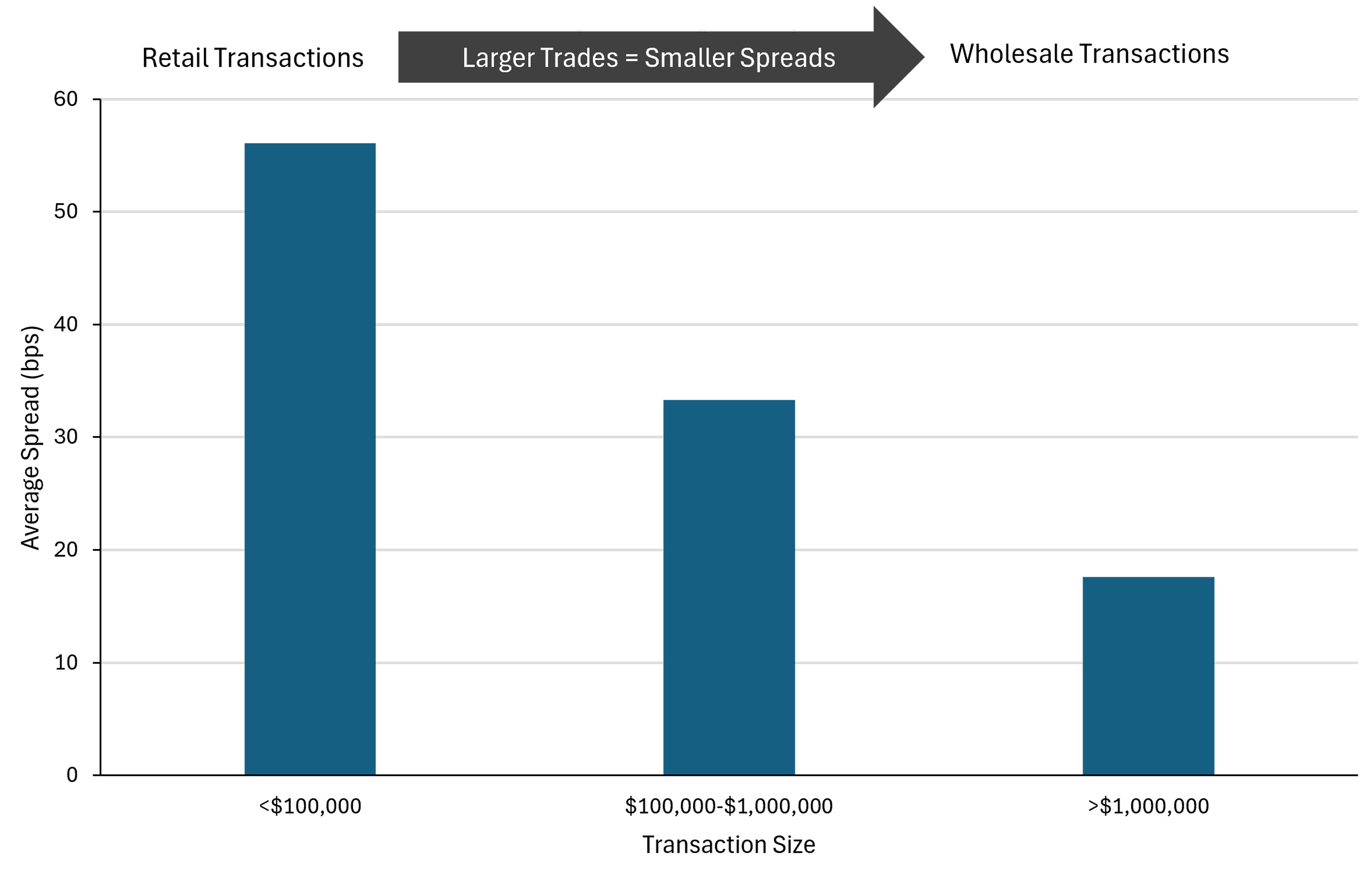
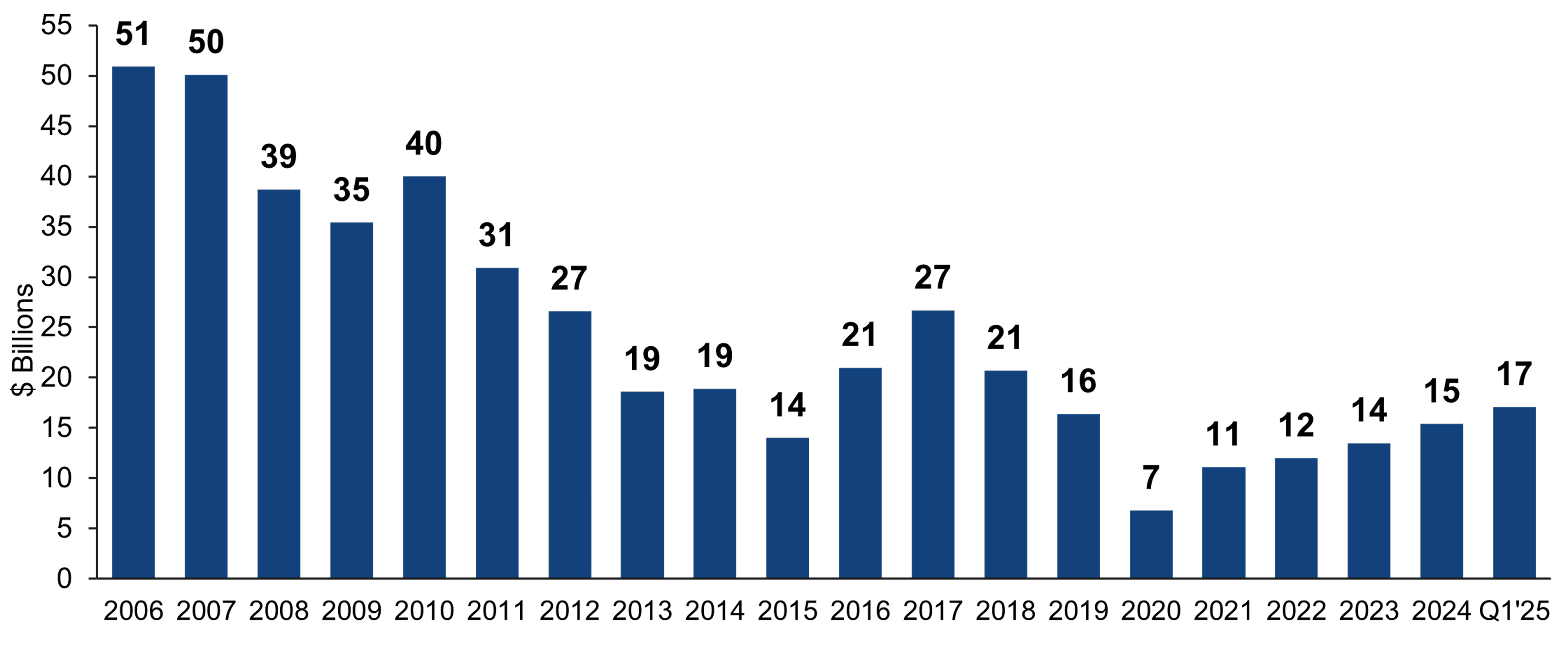
Figure 1. Buying Bonds in Bulk May Reduce Bid-Ask Spreads

Bid-ask spreads of municipal bond trades, par value, January 2023-June 2024

Bar Chart Showing Bid-ask spreads of municipal bond trades, par value, January 2023-June 2024
Source: “A Comparison of Transaction Costs for Municipal Securities and Other Fixed-Income Securities,” MSRB, March 2025. For illustrative purposes only and does not represent any specific portfolio managed by Lord Abbett or any particular investment strategy. Income from municipal bonds may be subject to the alternative minimum tax. Federal, state, and local taxes may apply. Bps = basis points; a basis point is one one-hundredth of a percentage point. 
  • Problem: Smaller retail trades can sometimes have bid-ask spreads, or execution costs, that are much higher than those for large block trades.
  • The Active Approach: Individual investors can potentially benefit from the institutional pricing power of a professional money manager, who tends to buy bonds in large blocks, leading to lower transaction costs, which translates to higher yields and total return potential.

2.      Access to Inventory

Figure 2. Dealers’ Inventory Levels of Municipal Bonds Have Declined Almost 70% Since 2007

Amount of municipal bonds on dealers’ balance sheets, (2006-2Q2025)

Bar Chart Showing Amount of municipal bonds on dealers’ balance sheets, (2006-2Q2025)
Source: The Bond Buyer. For illustrative purposes only and does not represent any specific portfolio managed by Lord Abbett or any particular investment 

While municipal bonds can offer great benefits to investors, it is a large (over $4 trillion) and fragmented market. The muni index alone includes over 60,000 different issues, most of which do not trade on any given day. Professional managers are in the market every day, working with a large network of dealers to ensure they are accessing the best opportunities in the market. Most retail investors have access to one or two dealers, at most a handful. Given market changes, this significantly restricts investor options.

  • Problem: Dealer inventory levels have declined by roughly 80% since 2007. Reduced inventory significantly restricts the opportunity set for retail investors to access municipal bonds.
  • The Active Approach: Institutional investors have a broad network of dealers, providing access to bonds from a wide array of sectors, states, maturities, and ratings. 

3.      Deep Credit Research Expertise

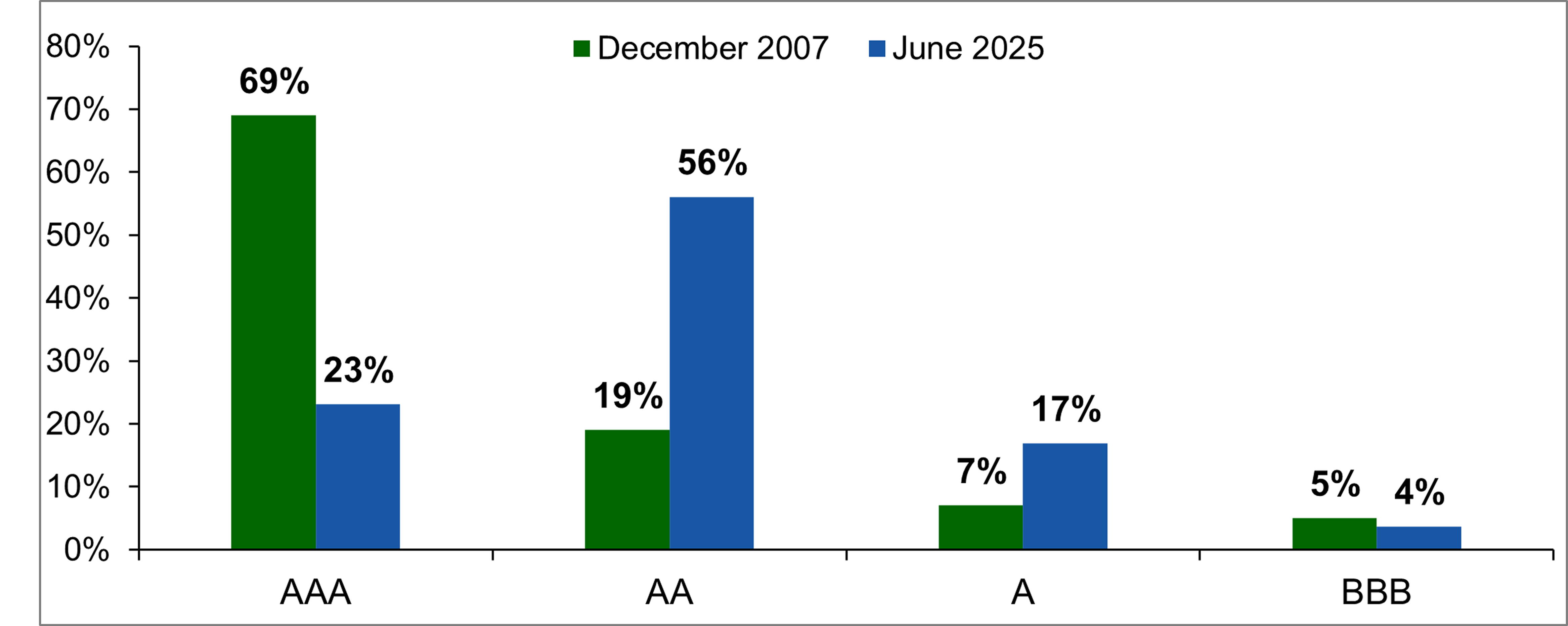
Figure 3. AAA-Rated Municipal Bonds Have Become Much Scarcer Since the GFC

Credit quality breakdown of the Bloomberg Municipal Bond Index

Bar Chart Showing Credit quality breakdown of the Bloomberg Municipal Bond Index
Source: Bloomberg Barclays Municipal Research. Breakdowns are as of 12/31/2007 and 06/30/2025, respectively. GFC=global financial crisis of 2008–09. Totals may not add to 100% due to rounding. Please note: Credit ratings are derived from the major U.S. credit rating agencies. Bonds included in the index must be rated by at least two of the following ratings agencies: Moody’s, Standard & Poor’s, or Fitch. Income from municipal bonds may be subject to the alternative minimum tax. Federal, state, and local taxes may apply. For illustrative purposes only and does not represent any specific portfolio managed by Lord Abbett or any particular investment. 

Prior to the global financial crisis (GFC) in 2008, approximately 70% of municipal bonds issued carried a credit rating of “AAA,” primarily due to the prevalence of municipal bond insurance. Over time, most muni-bond insurance companies lost their AAA rating status—not because of any issues with the municipal bond market, but due to problems in other areas.

  • Problem: Municipal bonds are no longer traded like a commodity. Insured muni bonds are much rarer today, creating performance dispersion between credits and making credit research more necessary.
  • The Active Approach: Professional managers employ a team of dedicated investment professionals who perform in-depth credit research into all bonds under consideration and monitor each security that is purchased. 

4.     The Discipline of Active Management 

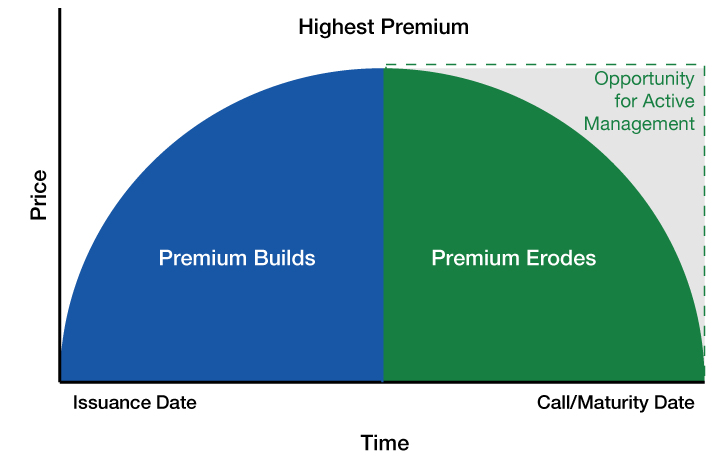
Figure 4. How Active Muni-Bond Strategies Might Capitalize on Changes in Bond Premiums

Half Circle Showing How Active Muni-Bond Strategies Might Capitalize on Changes in Bond Premiums
Source: Lord Abbett. A premium municipal bond is a security purchased at a price in excess of its par value and with a coupon rate that is higher than the prevailing market interest rate. This means that a premium municipal bond will sell for more than 100 percent of its par value. For illustrative purposes only and does not represent any specific portfolio managed by Lord Abbett or any particular investment.

While some investors may look to buy the highest-yielding bond they can find, and hold it to maturity, a professional manager analyzes relative value in the market to identify bonds that offer the most attractive risk/reward opportunities.

For example, active managers can help enhance returns through yield-curve roll-down, a strategy that involves buying bonds on the steepest parts of the curve and selling them before maturity. As bonds move down the curve, they may be valued at lower yields and higher prices, offering potential capital appreciation alongside tax-free income. However, this strategy depends on the yield curve's stability, which often fluctuates. Professional municipal managers, like Lord Abbett, continuously analyze the curve to identify the steepest segments and maximize roll-down opportunities.

  • Problem: Most investors purchase bonds and hold them to maturity. By holding bonds to maturity, investors may miss out on total return opportunities from bonds rolling down the curve.
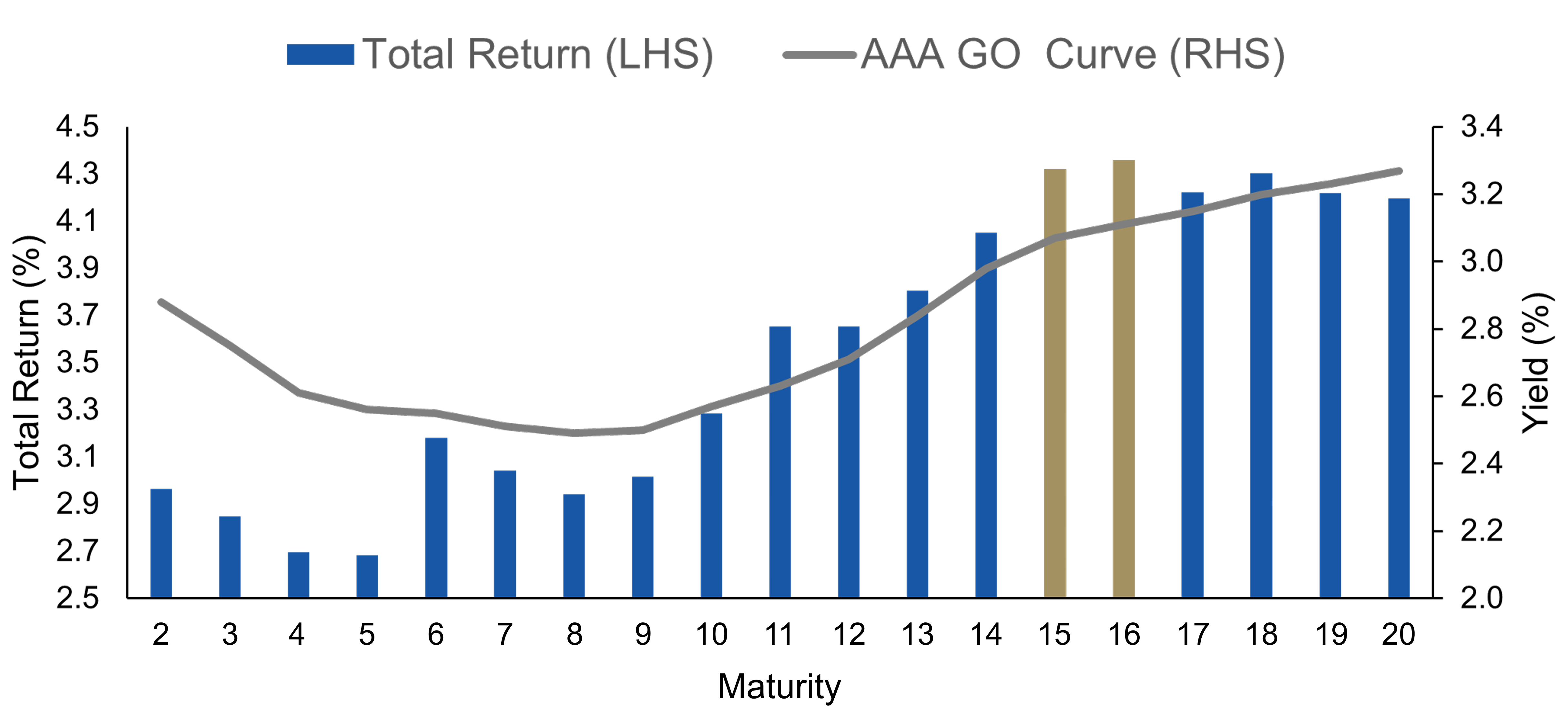
  • The Active Approach: Professional managers regularly monitor the overall shape of the yield curve to help them position portfolios to enhance total return. Figure 6 is an example of one such total return calculation broken up by maturity across the yield curve. 

Figure 5. Muni Managers Conduct Relative Value Assessments to Optimize Potential Returns

Case Study: Expected total returns per maturity

Bar Chart Showing Expected total returns per maturity
Source: Lord Abbett. AAA GO = AAA-rated general obligation bonds. For illustrative purposes only and does not represent any specific portfolio managed by Lord Abbett or any particular investment. Data does not represent current market data but is included as an illustration, via mathematical relationships of yield, maturity, and expected total return, of factors considered in the investment process. The analysis contained herein does not constitute a personal recommendation or investment advice and should not be used as the basis for any investment decision. Past performance is not a reliable indicator or guarantee of future results.

Summing Up: The Potential Advantages of Active Management

With yields near the highest levels of the last decade, municipal bonds offer high tax-free income and attractive total return opportunities. And with the fundamental backdrop of the market continuing to show strength, including overall credit quality and supply/demand dynamics, we believe today makes for an attractive entry point into municipal bonds. We believe muni-focused investors would be well-served by teaming up with a pro­fessional municipal bond manager that can provide better access to inventory, institutional pricing power, deep credit expertise, and relative value perspectives to take full advantage of the opportunities in the market.