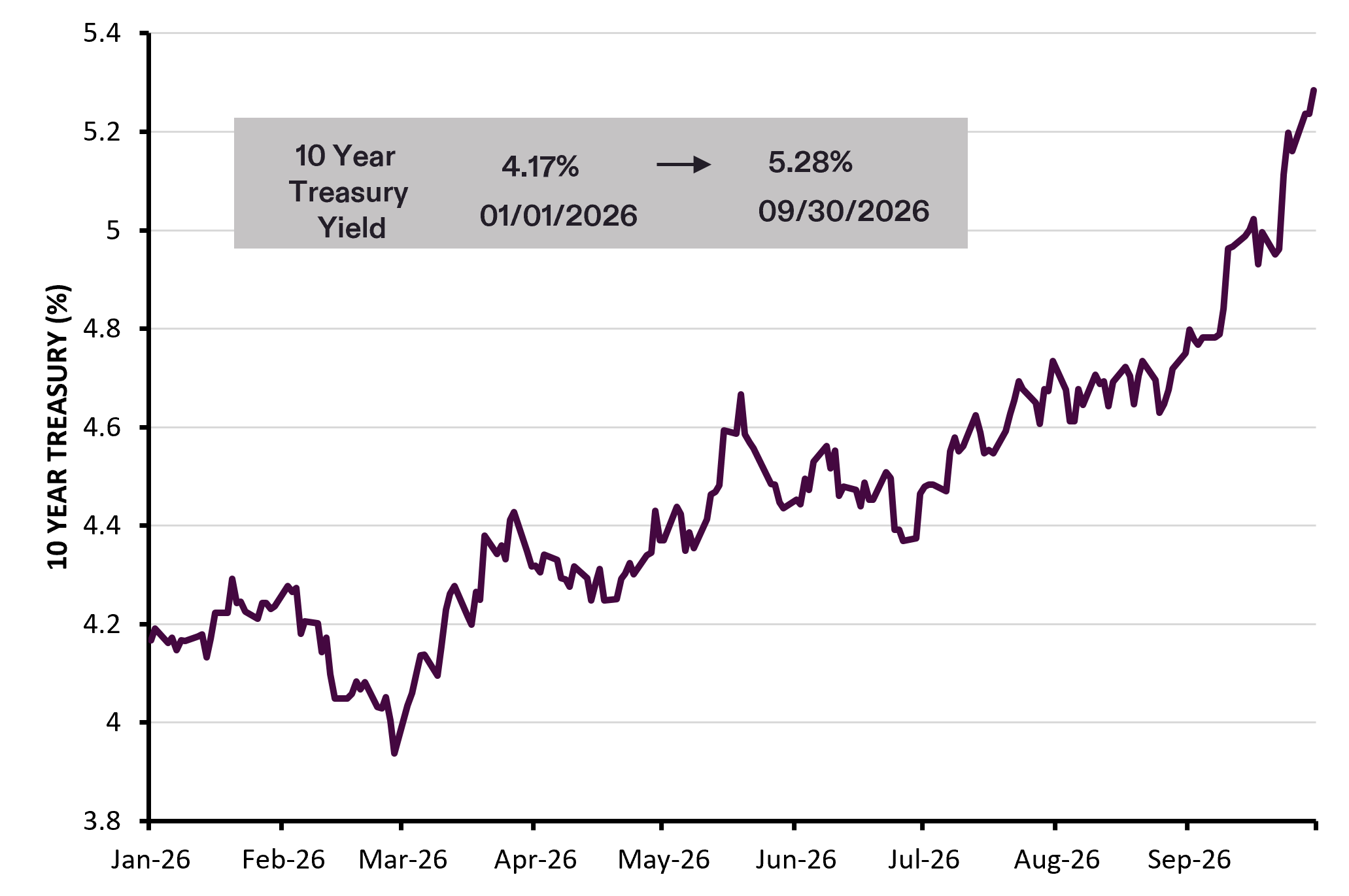
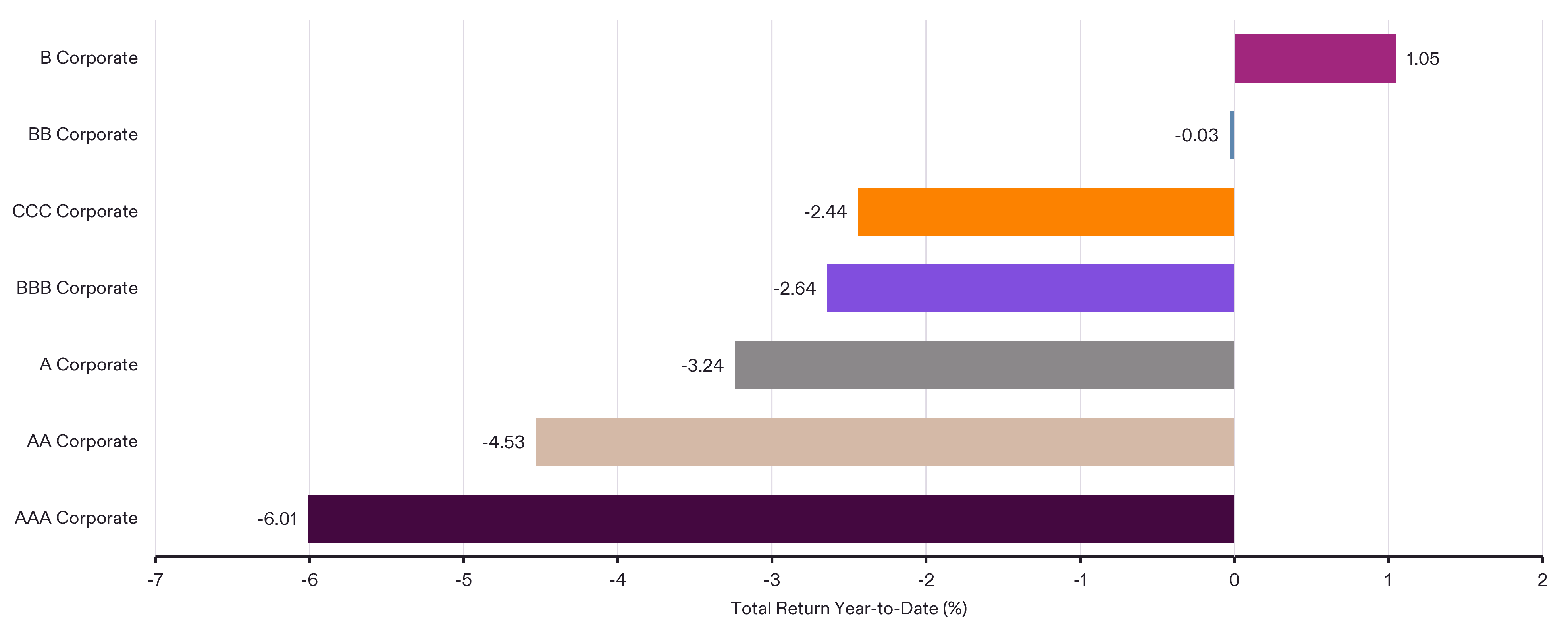
Interest rates have moved sharply higher in 2026, fundamentally changing the fixed income landscape. Between February 27 and September 30, the 10-year U.S. Treasury yield rose approximately 135 basis points, while two-year yields increased approximately 151 basis points. The yield curve flattened as markets shifted from expecting Federal Reserve (Fed) rate cuts earlier in the year to anticipating additional tightening (data source: Bloomberg, as of the dates noted).
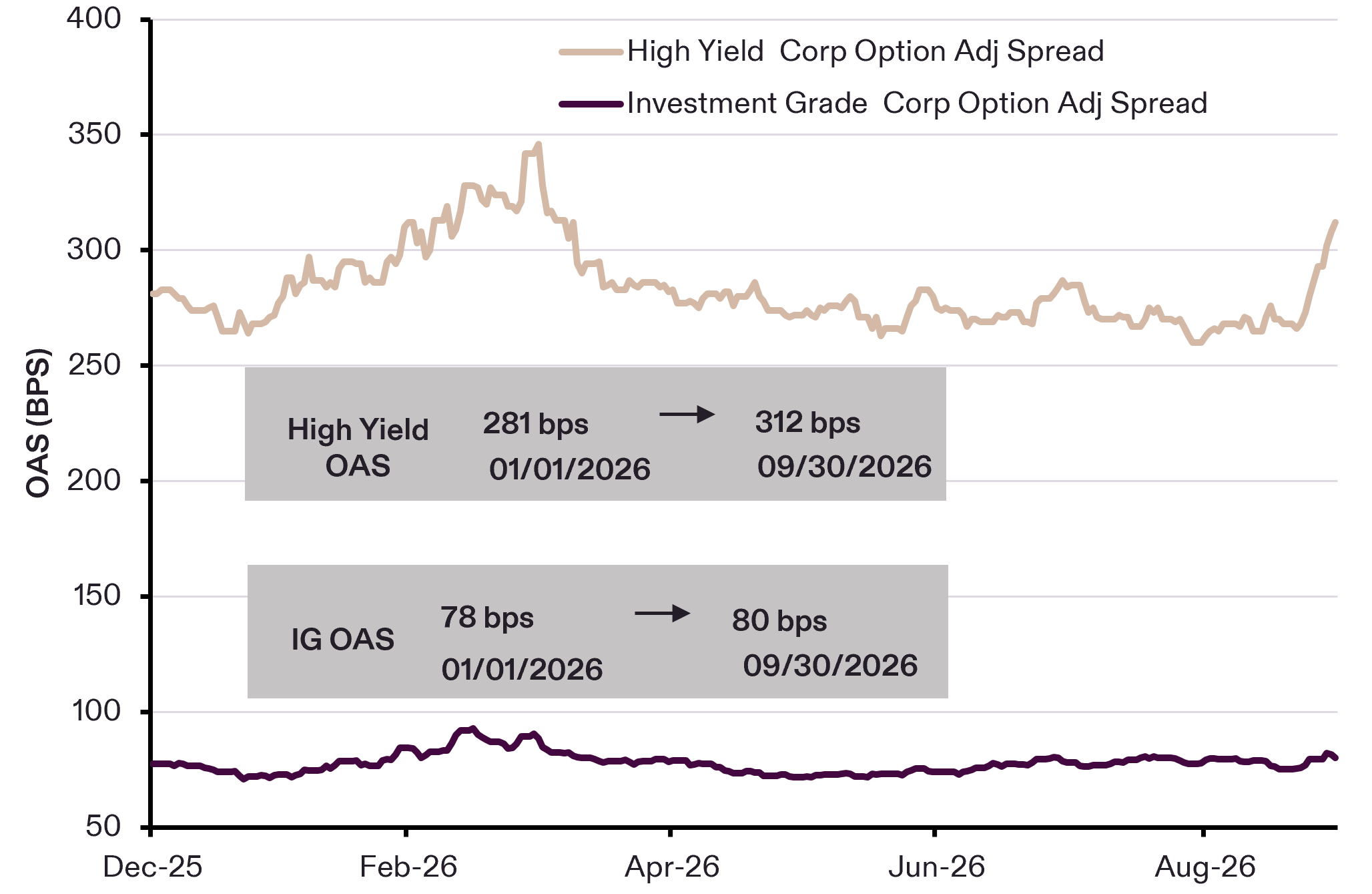
But the reasons behind the rise in rates are important. Unlike 2022, when surging inflation and aggressive Fed tightening drove bond-market volatility, much of the increase in Treasury yields in 2026 has reflected stronger real, or inflation-adjusted, yields. Economic growth has remained resilient, supported by healthy employment, consumer spending, corporate earnings, and private investment. Inflation expectations, meanwhile, have accounted for a smaller portion of the rise in nominal yields. These differences help to explain why credit markets have remained relatively more stable despite the significant repricing of interest rates (see Figure 1).
The 10-year Treasury yield increased from 4.17% at the beginning of 2026 to 5.28% at the end of September. Over the same period, investment-grade corporate option-adjusted spreads moved only from 78 to 80 basis points, while high yield spreads widened from 281 to 312 basis points. The divergence suggests that higher rates may not have led to credit deterioration, as resilient growth has helped corporate borrowers absorb higher financing costs, though the impact varies by issuer.