This is a marketing communication.

Key Points

  • The U.S. economy has a number of long-term tailwinds driving strong growth, and the current macro backdrop of low unemployment, and declining inflation could create a positive environment for risk assets in 2025.
  • Potential risks include a starting point of compressed risk premiums in many markets and possible lingering inflation pressures which may endanger the U.S. Federal Reserve’s (Fed’s) easing cycle.
  • Given broader participation in earnings growth and attractive yields across credit sectors, we believe selectivity within an actively managed approach will be essential in 2025.

The U.S. economy has demonstrated exceptional resilience since the pre-pandemic period. The level of real gross domestic product (GDP) has expanded by over 12% since 2019, driven by increasing productivity, exceptional profit margin growth at U.S. companies, and a virtuous cycle of wealth creation driven by housing and equity price gains.

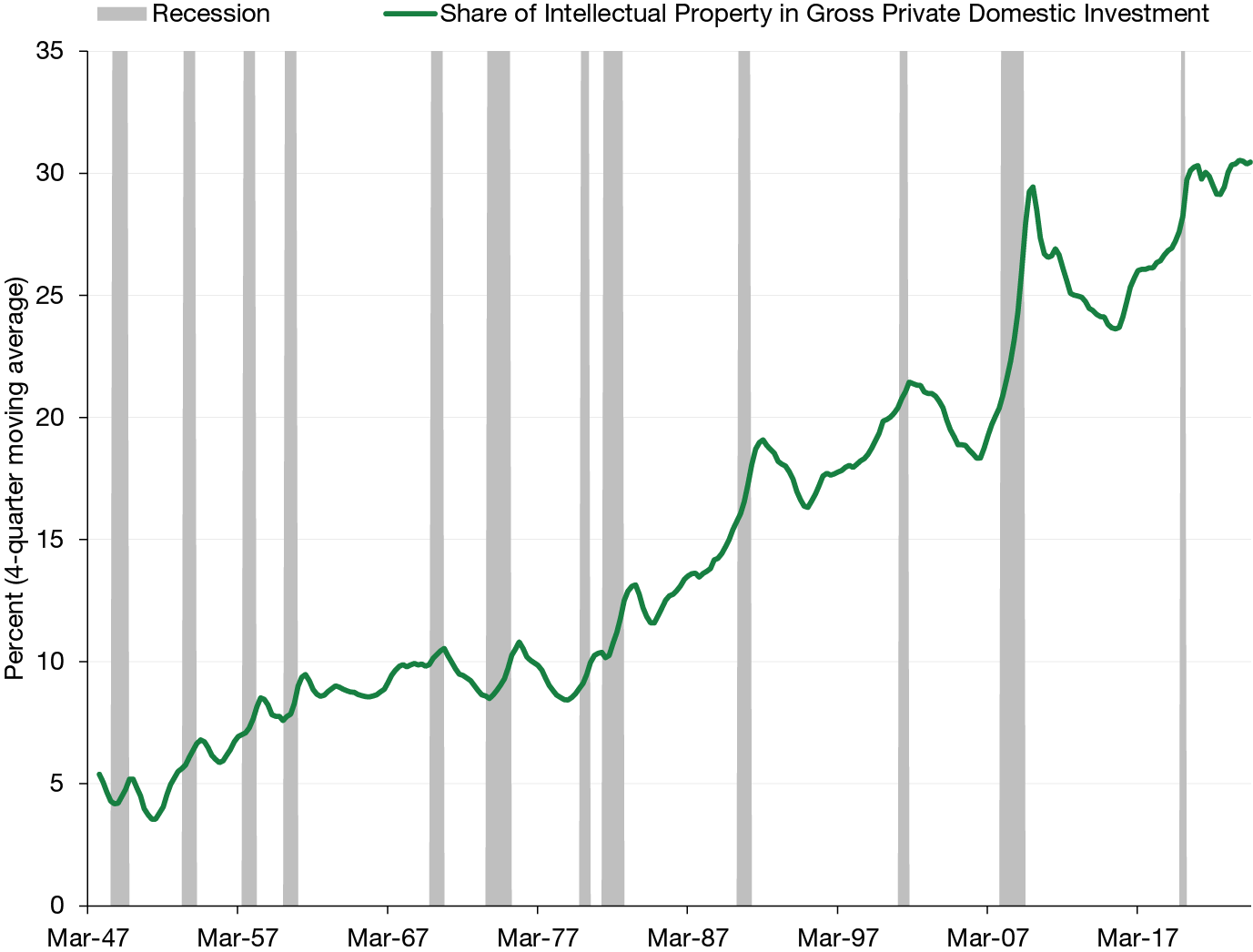
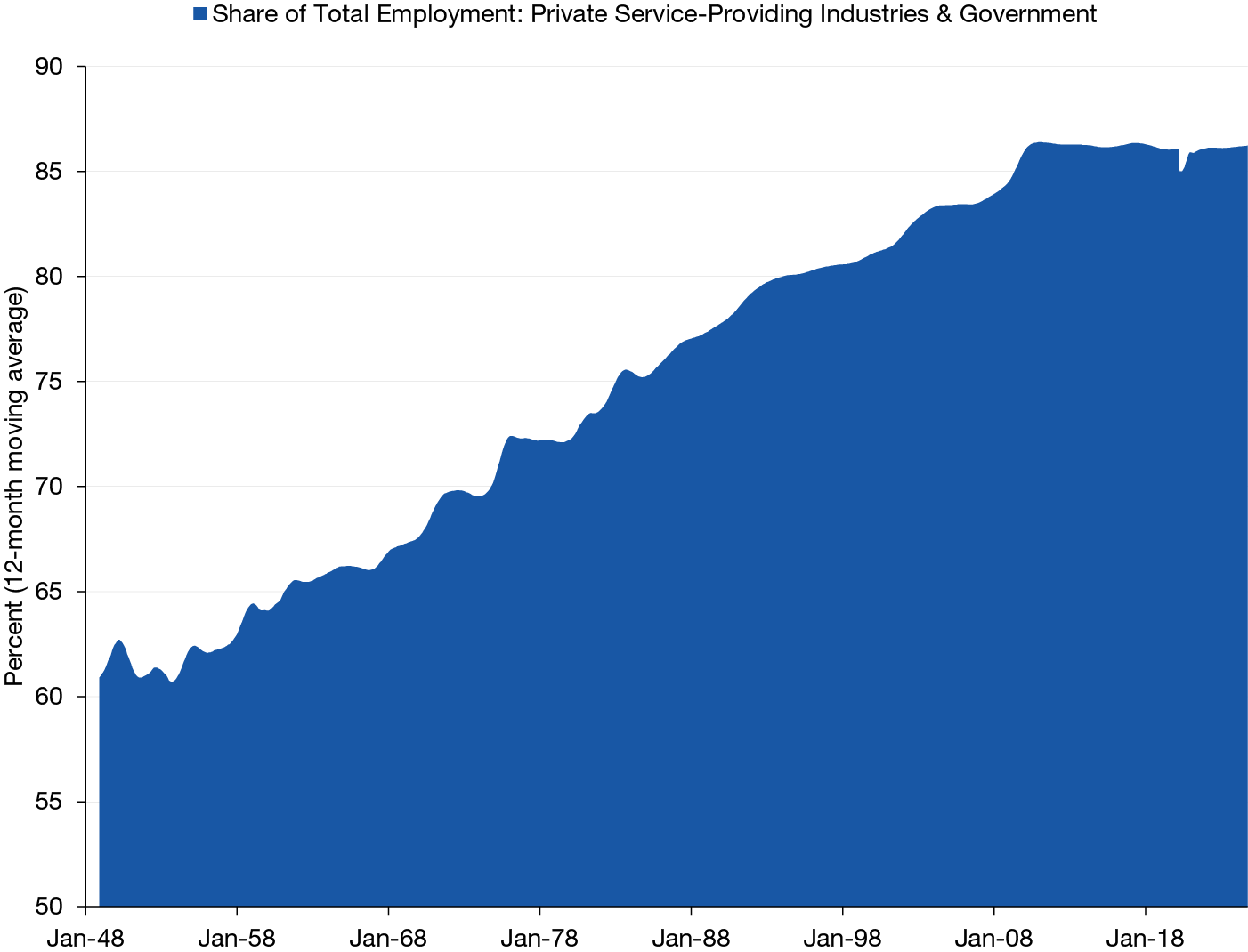
There’s good reason to believe this strong and relatively steady growth can continue. For one, the U.S. economy continues its evolution to become more and more services oriented after a brief spike in goods consumption during the pandemic. Because production and consumption of services are linked so closely in time, the likelihood of mismatches between production and inventory and demand is much smaller, which may be contributing to less volatile economic cycles. Further, investment today focuses on intellectual property; things like research and development (R&D), software spending, spending on brand and copyrights. This kind of spending tends to have multi-year horizons aligned with a company’s strategy and so also tends to be less cyclical than spending on machinery or factories, for example. In the lower panel of Figure 1, the percent of intellectual property investment increases during recessions and then decreases as other investment rebounds, providing a balancing force to the economy. 

It’s always dangerous to forecast the death of the business cycle and we are certainly not doing that. Rather we are highlighting the secular forces that may well continue to drive steady growth going forward and are contributing to optimistic sentiment and valuations.

Figure 1. Increasing Service and Public Sector Value-Added and Rising Share of Non-Cyclical Fixed Investment

Private services as a share of total employment, December 31, 1948-October 31, 2024 (upper panel); share of intellectual property in gross private domestic investment, December 31, 1947-September 30, 2024 (lower panel)

Chart showing Increasing Service and Public Sector Value-Added and Rising Share of Non-Cyclical Fixed Investment
Source: Bloomberg and Lord Abbett. Data as of October 31, 2024. For illustrative purposes only and does not represent any specific portfolio managed by Lord Abbett or any particular investment.
line chart showing periods of recession and share of intellectual property in gross private domestic investment
Source: Bloomberg and Lord Abbett. Data September 30, 2024. For illustrative purposes only and does not represent any specific portfolio managed by Lord Abbett or any particular investment.

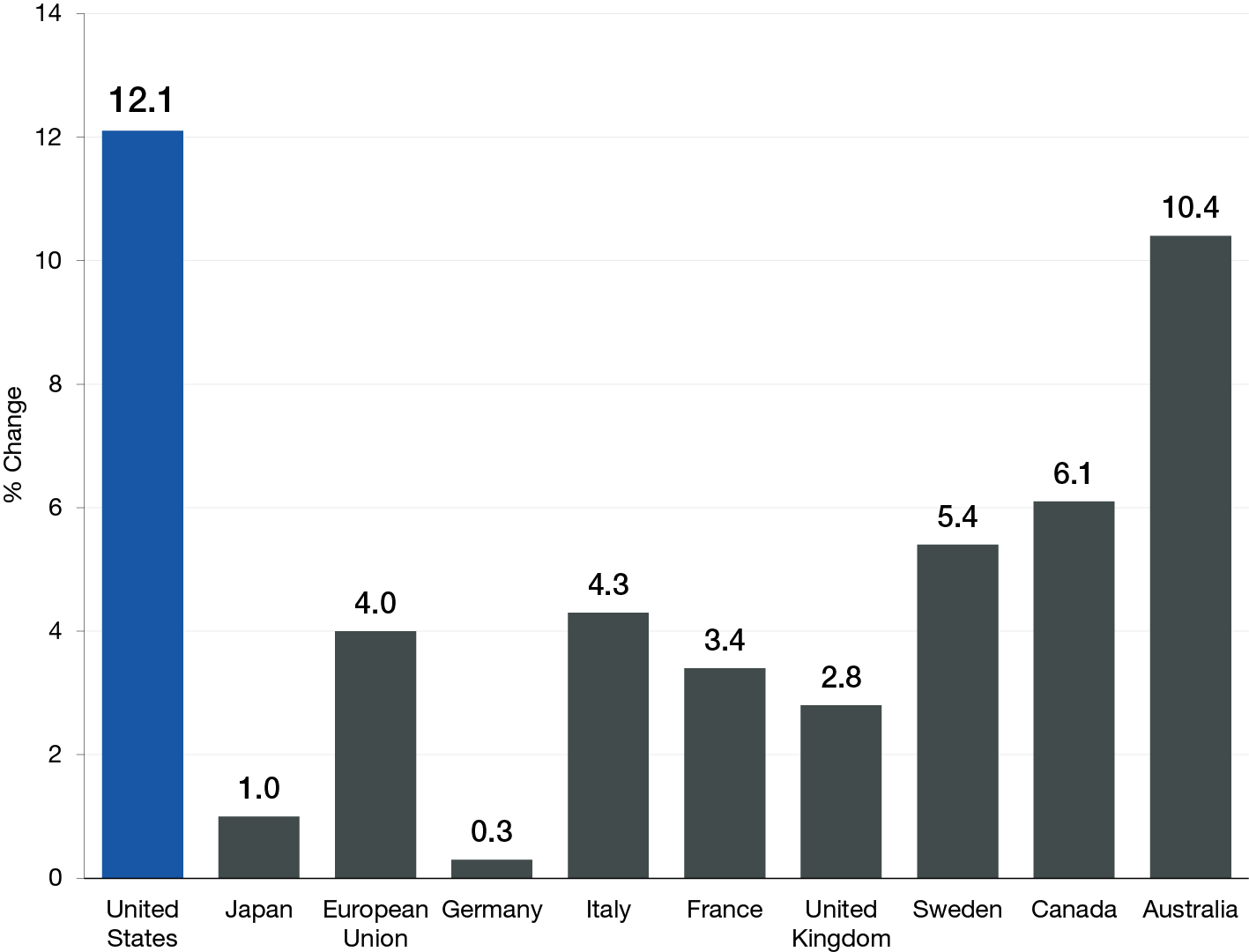
The growth in the U.S. is particularly impressive when viewed in a global context, by comparing it to other major economies like Japan and Germany, which have experienced notably weaker recoveries. 

Figure 2. Exceptional U.S. Real GDP Growth After the Pandemic

Percent change in the level of real GDP, June 30, 2024, versus 2019

Bar Chart showing real GDP growth after the pandemic
Source: Bloomberg and Lord Abbett. Data as of June 30, 2024. Real GDP is a measure of a country's economic output that's adjusted for inflation. For illustrative purposes only and does not represent any specific portfolio managed by Lord Abbett or any particular investment.

However, in addition to the positive domestic factors, the global economic landscape is showing signs of improving macroeconomic conditions. Central banks around the world, including the Fed, have been cutting interest rates, with additional cuts expected in 2025. Furthermore, China's proactive economic measures, such as rate cuts and fiscal stimulus, are expected to bolster global economic growth. This international support, combined with the strong domestic fundamentals, provide a supportive environment for risk assets as we enter 2025.

Cooling inflation has also been a key factor contributing to strong financial market performance. Recent data has shown inflation moderating towards the Fed’s 2% target.  The steady growth environment described earlier may also serve to keep inflation uncertainty and risk premiums in equities, rates, and credit lower for longer, which is beneficial for all risk assets. However, there are risks that could introduce elements of inflation pressures, which could sidetrack the Fed’s current program of monetary easing. Those elements could include persistently high housing and rent prices, higher labor costs, uncertainty surrounding global trade, and excess aggregate demand as U.S. and global economic growth increases. 

Another risk to the optimistic thesis is the undeniable compression of risk premiums compared to history in most markets. While those don’t necessarily imply that asset prices will fall, they do imply that returns may be more muted than in the past few years. In most cases, we feel the expanded valuations are deserved given the favorable economic backdrop and there are myriad opportunities for active managers to add value via sector rotation and security selection.

In the other segments of our 2025 investment outlook, we discuss how these conditions as well as the increased participation of a wider swath of companies growing earnings and favorable yields across fixed income sectors informs our positive outlook on risk assets.

Specific themes we favor that you will find in our 2025 Investment Outlooks for fixed income and equities:

  • Recognizing the vast growth potential in AI and genomics.
  • Broadening market participation and an earnings-driven rally, with certain international markets offering opportunities.
  • Sustained high nominal economic growth and healthy margins supporting credit, maintaining higher rates for an extended period.
  • Potential for enhanced carry and reduced rate risk at the short end of the taxable fixed-income curve, especially in credit.

Key Points

  • Ingredients for a favorable backdrop for credit risk assets heading into 2025 include the U.S. economy's still-strong growth and lower inflation, central banks' rate cuts, and China's proactive stimulus measures still to come.
  • Rebounding inflation risks are a potential challenge and could influence future monetary policy decisions. Much depends on the Fed’s willingness to accept inflation above its target in the near term.
  • Fixed income has delivered strong returns due to the significance of carry. Attractive starting yields heading into 2025 offer potential returns, while credit can help to provide the flexibility to adapt to changing macroeconomic conditions.

As we wrap up what has so far been a stellar year for a number of fixed income strategies, it's essential to consider the factors that will shape the market in the coming year. We remain constructive on fixed income to deliver attractive risk-adjusted returns, and our outlook is grounded in both macroeconomic and fundamental factors. However, the investment landscape can be complex and requires a balanced approach that includes an assessment of risks along with opportunities. Key challenges for fixed income markets include navigating the various potential paths of monetary policy, balancing tight credit spreads with historically attractive yields, and ensuring portfolio resilience for outcomes outside base-case assumptions.

A Favorable Backdrop Heading into 2025

The U.S. economy is currently experiencing above-trend economic growth, low levels of unemployment, and lower inflation, though prices remain elevated due to the lingering effects of past inflation. Overall, this sets a relatively positive tone for the economic outlook in the U.S., although markets will look for clarity around the incoming administration’s fiscal, immigration, and tariff policies. 

Looking to monetary policy and the broader global picture, several central banks, including the Fed, have been cutting policy rates. Similarly, the European Central Bank, the Bank of England, and the Bank of Canada have also implemented rate cuts. This shift from tight to less restrictive monetary policies is generally favorable for risk assets, even as the extent of additional easing remains a lively debate. Meanwhile, China is actively working to stimulate its economy through rate cuts, support for the property sector, and various other fiscal stimulus measures. Despite significant economic challenges, the Chinese government is showing a strong commitment to providing economic stability and support. When combining the easing monetary policies of major central banks with China's proactive economic measures, the overall global backdrop is positive, even amid some potential headwinds.

We believe private fixed income markets will both deepen and broaden, providing a tailwind to credit. Large capitalization (cap) direct lending, having established itself as a viable financing option for larger companies over the last several years, will remain a lever for borrowers to pull when the opportunity suits them. Additionally, we believe tremendous growth in the private asset backed space is inevitable, particularly as banks adjust balance sheets to the current regulatory and rate environment. Crucially, we believe credit investors will need private markets expertise and capabilities; with borrowers toggling between public and private markets, developments in one market will increasingly impact developments in the other. 

Factors that Can Influence Monetary Policy

There are several important considerations that should be addressed as we move into 2025. The first is the Fed’s stance on inflation. The Fed has initiated an easing cycle, while U.S. economic growth has remained strong. This cycle is quite unique in that way. Meanwhile, how much inflation will the Fed tolerate in 2025? If the Fed is willing to accept a temporary potential rebound in inflation, it could continue to be beneficial for risk markets, particularly leveraged credit courtesy of strong nominal growth. Conversely, if the Fed opts to increase rates if inflation rises, it could create a challenge for risk assets. Understanding the Fed's approach—whether they will cut rates, pause, or hike—is essential. Our view is that the likelihood of rate hikes in the near term is low and that the Fed is likely to focus on the glide path toward its target, longer term.

The Importance of Attractive Carry Persists

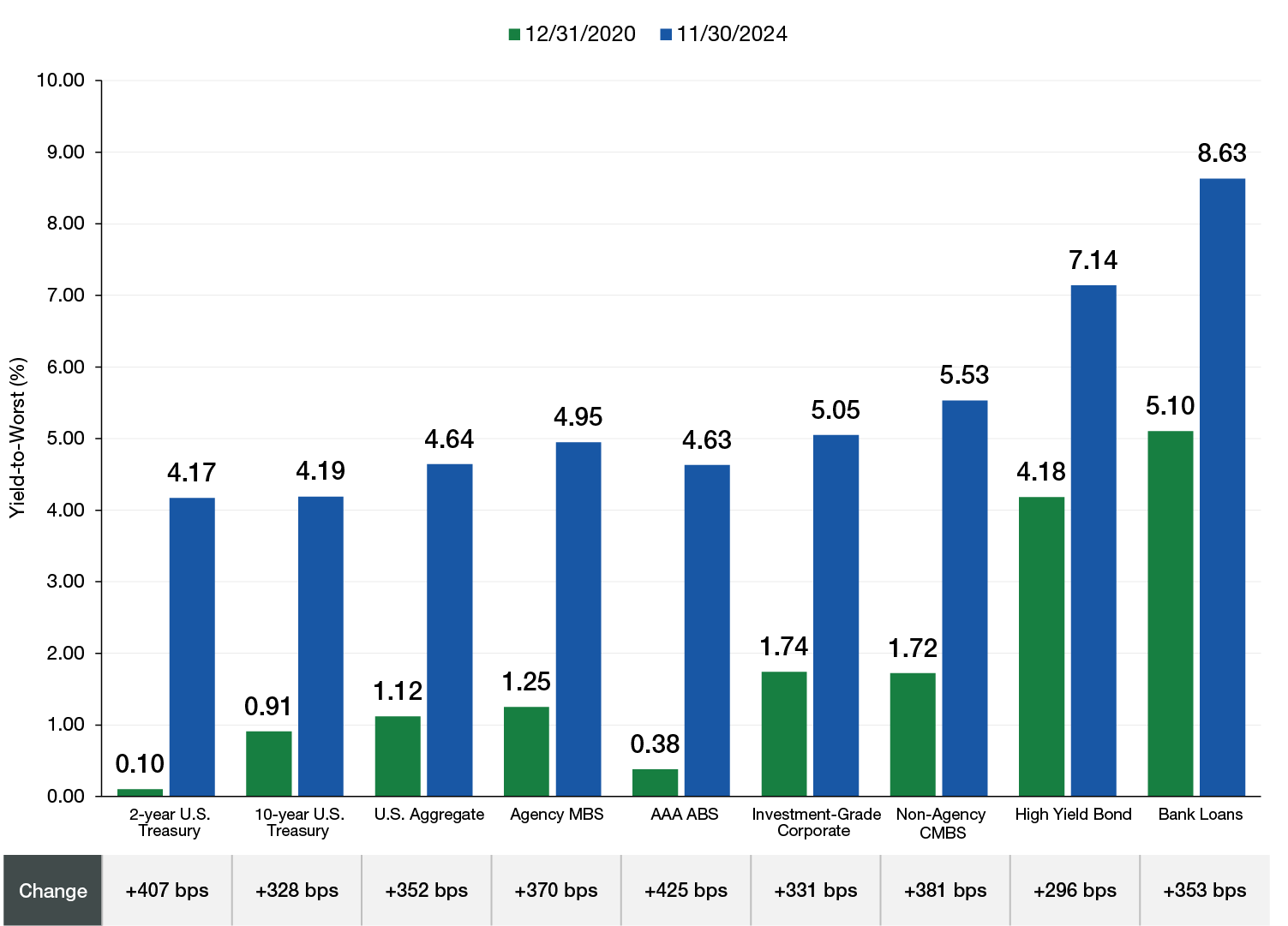
Fixed income has delivered strong returns in 2024, driven by the importance of carry, which is still very relevant as we enter 2025 (see Figure 3). It’s hard to ignore that index level spreads across many pockets of the credit markets are now near historic lows as a result. But fixed income yields remain attractive and can help to provide prospective returns, while credit offers multiple dimensions to adapt to potential changes in macroeconomic conditions.

Figure 3. Starting Yields Across Fixed Income Sectors Remain Attractive

Yield-to-worst on indicated indexes, December 31, 2020, and November 30, 2024

Bar Chart showing yields across fixedincome sectors
Source: Bloomberg and Credit Suisse. Data as of November 30, 2024. Indexes: Bloomberg 2-year U.S. Treasury Index, Bloomberg 10-year U.S. Treasury Index, Bloomberg U.S. Aggregate Bond Index, Bloomberg U.S. Agency MBS Index, Bloomberg AAA-Rated U.S. ABS Index, Bloomberg U.S. Corporate Index, Bloomberg Non-Agency CMBS Index, Bloomberg U.S. High Yield Corporate Index. MBS=mortgage-backed security. CMBS=commercial mortgage-backed security. ABS=asset-backed security. Past performance is not a reliable indicator or guarantee of future results. For illustrative purposes only and does not represent any specific portfolio managed by Lord Abbett or any particular investment. Due to market volatility, the market may not perform in a similar manner in the future. Indexes are unmanaged, do not reflect the deduction of fees or expenses, and are not available for direct investment.

We continue to favor credit exposures that specifically benefits from easier financial conditions, and where we can maximize carry while maintaining a relatively short duration. These include short-term, high yield bonds and select ‘single-asset, single-borrower’ CMBS exposures. In addition, we believe floating-rate instruments, which can take various forms, including bank loans, CLO tranches, and private credit, can continue to offer attractive yield. Generally, these lower-rated and/or consumer-related exposures benefit from above-trend nominal earnings and personal income growth. 

Within high-quality fixed income, we similarly favor asset-backed securities that offer exposure to positive consumer trends and investment-grade corporate bonds, particularly in the banking and energy sectors, due to the overall healthy trends in earnings and economic growth. We also see good relative value in agency MBS that could benefit from a fall in interest-rate volatility in the year ahead. 

We anticipate that rate risk could remain somewhat elevated, and predicting rate movements has proven difficult for many managers—and even the best economists—over the years. Given these challenges, while rate risk remains a significant factor, we believe diversifying with credit can help to provide a more balanced and resilient fixed income investment strategy in the months ahead.

Key Points

  • We are selectively bullish on the equity market at the start of 2025.
  • In our view, four factors that have contributed to the 2024 rally—positive market momentum, a moderation in inflation, easier monetary policy from central banks, and strong corporate earnings—remain supportive for the market.
  • Key drivers like Gen AI and infrastructure spending, coupled with global economic resiliency, could provide a solid foundation for continued market strength.

The strength in equities that we expected for the second half of 2024 was confirmed by the performance of the market, with the S&P 500® Index advancing nearly 11% from July 1 through December 9.  Small-cap stocks have also rallied, with the Russell 2000® Index up roughly 17% in that time frame, as a resilient U.S. economy, the prospect of additional rate cuts from the Fed, and the continued investment in, and increasing adoption of, generative artificial intelligence (Gen AI) fuel positive investor sentiment.

Going into 2025, the factors that have driven the equity markets remain very robust, in our opinion.  Here is a quick review of each:

  • The momentum of the market remains quite positive based on technical signals. One measure we watch, market breadth—the percentage of companies in the S&P 500 trading above their 150-day moving average—has improved to 70% as of December 10 since reaching a recent low of 21% on October 27, 2023, based on data from Bloomberg.
  • Inflation in developed markets has come down significantly and is now at a level that should be supportive for forward market returns. In the United States, the core consumer price index (which excludes food and energy prices) has moderated since hitting a peak of 6.6% in September 2022, and now is only slightly above the U.S. Federal Reserve’s (Fed) stated target of 2%. Companies in the innovation space, as well as quality companies with strong revenue and earnings growth, could be poised to benefit from a continuation of this trend. 
  • We are also watching central bank policy moves, especially those by the Fed, which cut the target fed funds rate by 50 basis points (bps) in September and 25 bps in November. While market observers may differ over the size and number of additional Fed moves in the months to come, we think the most important takeaway from the changing monetary policy regime is this: The aggressive Fed tightening cycle that whipsawed markets in the past few years is over.
  • Finally, the earnings backdrop remains favorable. As of December 6, the estimated (year-over-year) earnings growth rate for Q4 2024 for the S&P 500 is 11.9%, according to FactSet; this exceeds the five-year average earnings growth rate of 10.4% and the 10-year average earnings growth rate of 8.5%. Such an increase would also represent the sixth consecutive quarter of year-over-year earnings growth.

Earnings: Beyond the Magnificent Seven

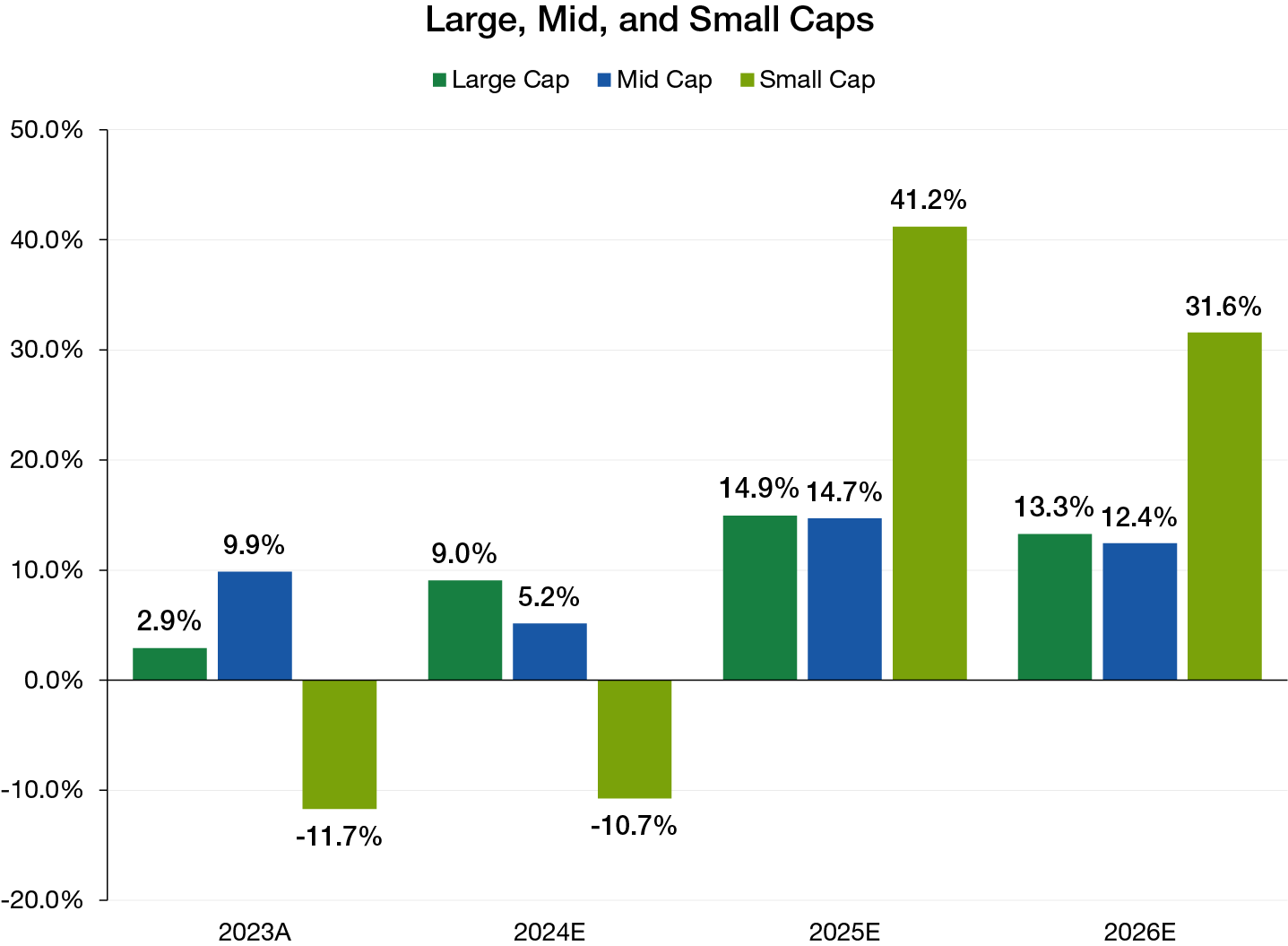
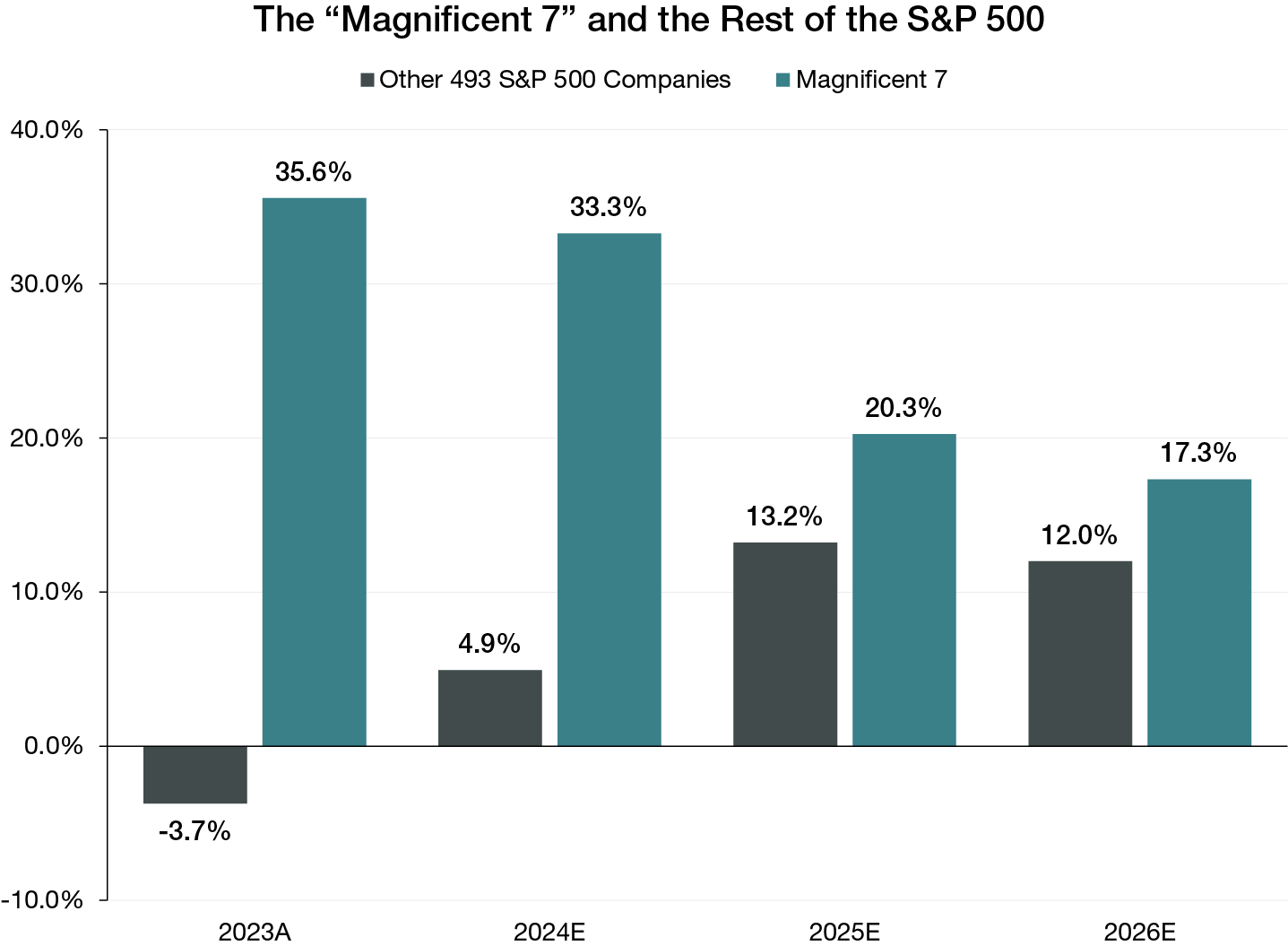
Let’s take a closer look at the final factor. Much of the earnings discussion in late 2024 revolves around the performance of three areas: the so-called Magnificent Seven mega-cap stocks (Nvidia, Meta, Tesla, Amazon, Alphabet, Apple, and Microsoft), the “S&P 493” (i.e., the rest of the market after the performance of the Magnificent Seven has been subtracted), and small-cap equities. (See Figure 4.) In 2023, the Magnificent Seven grew earnings by 36%, while the S&P 493 was more or less flat. Small caps, as measured by the Russell 2000, had negative earnings growth. That was a big reason why the mega-cap stocks outpaced other areas of the market in 2023. 

Figure 4. Strong Earnings Growth Increases Potential Opportunities in Equities 

Actual and estimated year-over-year earnings growth rates of small, mid, and large cap companies (upper panel) and indicated segments of the S&P 500® Index (lower panel) as of December 5, 2024

Bar Chart showing actual and estimated year-over-year earnings growth rates of small, mid, and large cap companies
bar chart showing the magnificent 7 and the rest of the S&P 500

Source: FactSet and Bloomberg. Data as of December 5, 2024. A=actual. E=estimated. Large cap stocks represented by the Russell 1000® Index; mid caps, by the Russell Midcap® Index; and small caps by the Russell 2000® Index. “Magnificent 7” refers to mega-cap companies Nvidia, Meta, Tesla, Amazon, Alphabet, Apple, and Microsoft. Earnings growth as measured by growth in net income.

Past performance is not a reliable indicator or guarantee of future results. The historical data shown in the chart above are for illustrative purposes only and do not represent any specific portfolio managed by Lord Abbett.

The earnings outlook going into 2025 is quite different. The Magnificent Seven appears set for a continuation of strong growth, but based on analyst forecasts, the rate is going to come down from 33% to around 20%. S&P 493 earnings growth is expected to move up to around 13%. For the Russell 2000, forecasts call for growth to rebound strongly. Note, however, that those forecasts appear to reflect easier year-over-year comparisons for health care companies (a significant component of the Russell 2000), along with an expected drop in the percentage of index members posting negative earnings over the next year.

What are the implications of these shifts? The huge differential in earnings that existed in 2023 has reversed, and the trend appears intact as we head into 2025. We think that if the differential continues to narrow in 2025, small caps, mid caps, and large caps are positioned to do well in comparison to the mega caps.

Select Areas of Opportunity for 2025

Here are some of the themes we will be emphasizing in the New Year:

Generative AI: We believe the potential of generative AI is still largely underestimated by the market and is likely to have an impact similar in scale to the Internet. We have identified three distinct phases tracing the current and future growth of generative AI. The first phase, capital investment in the computing power and infrastructure necessary for widespread AI adoption, is well underway. The second phase, software development, encompasses the applications of AI that enhance revenue and productivity for enterprises across industries. The third and final phase, broad-based deployment, will take shape when the tools and technologies that power generative AI become universally available.

As more companies embrace AI, we expect to see an ushering in of an era of efficiency and productivity gains across industries and market capitalizations. Given the rapid pace of development, we are likely to see additional opportunities in 2025 across the generative AI lifecycle described above.

Quality: We have long emphasized investing in quality companies with durable competitive advantages led by capable management teams. We do this in growth and value stocks, and in U.S. and non-U.S. companies. 

Within the universe of dividend-paying stocks, we believe investors can benefit by focusing on high-quality companies with long histories of dividend growth. These companies typically have stable earnings, robust cash flows, and a disciplined approach to returning capital to shareholders.

International Exposure: We are also positive on prospects for international stocks in 2025. As mentioned above, the global disinflation narrative is intact, which has allowed central banks globally to begin easing monetary policy. Based on forecasts from the International Monetary Fund, a “soft landing” is in view, as economic growth is expected to moderate next year but stay positive in most developed markets, while maintaining a stronger profile in emerging markets. Historically, this kind of environment tends to be positive for the type of strong, global businesses we favor in international equities.

The appeal of a broader geographic exposure becomes evident when one considers the many secular drivers that are positioned to benefit companies outside the United States. For example, the increasing adoption of AI cited earlier could benefit AI-adjacent companies in Japan and Taiwan, many of which are smaller concerns that play in other parts of the supply chain outside of chip manufacturing. The next wave of drugs to treat obesity, including once-daily oral treatment, GLP-1 combination therapies and amylin analogues, are expected to deliver further weight loss benefits to a much wider population but also to address the less desirable side effects of the current class of drugs; most notably, nausea, vomiting, and muscle loss.

In addition, there are several other significant secular growth opportunities which may provide support to companies we invest in, including the need for extensive investment in the power grid, data centers, public infrastructure, European defense, and regional supply chains. We also anticipate further investments arising from the continuing efforts to deliver Japanese corporate reform and the rapid economic growth of India.

While we believe the U.S. equity rally may still have room to run, we think it is worthwhile to look at non-U.S. equity markets as well for their diversification benefits amid cyclical and secular tailwinds. 
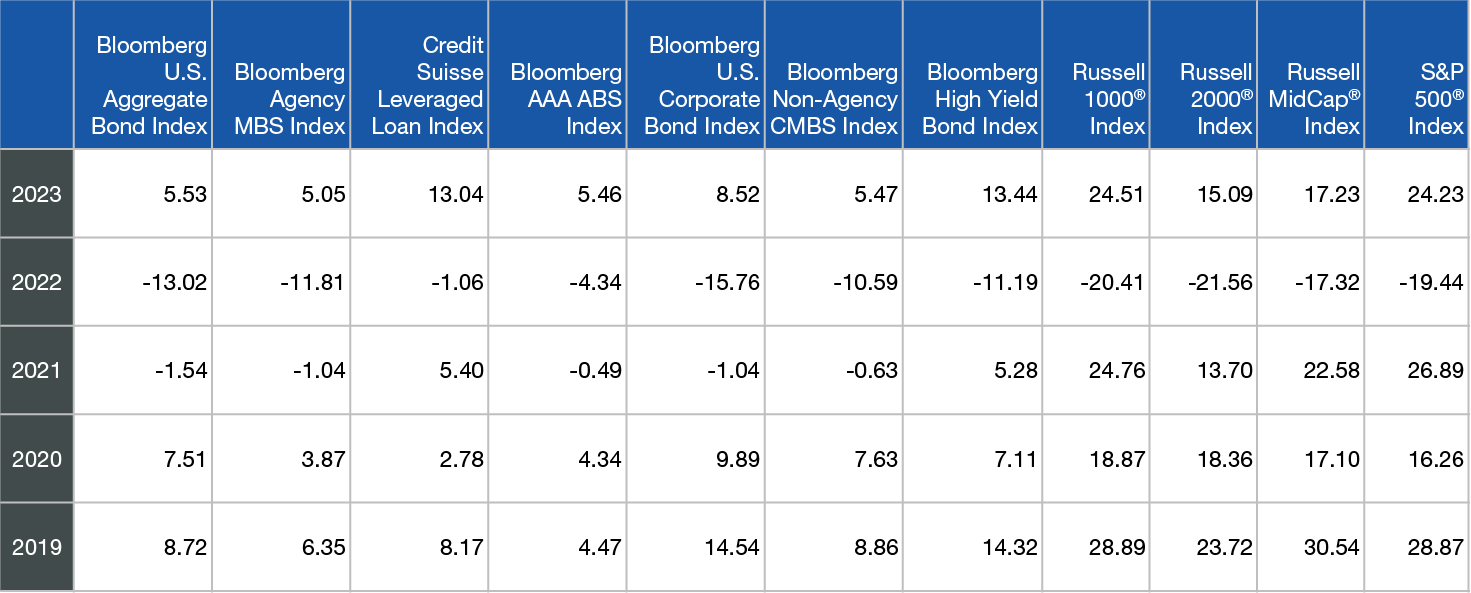
Past Performance of Selected Indices (Calendar Year):

Past Performance Chart
Source: Bloomberg and Credit Suisse. Returns shown are expressed in percent. Return data is based on U.S. dollar-denominated index data. Performance of the indices may be affected by changes in the exchange rates between the currency denomination of the indices and any non-U.S. dollar denomination.