This is a marketing communication.

Going into 2025, we think the factors that have driven the equity bull market of the last two years remain favorable. Here is a quick review of each:

  1. Technology advances: The tech revolution continues to be a tailwind for equities, opening new markets and enhancing economic productivity. Breakthroughs in generative artificial intelligence (AI) over the past couple of years have strengthened this positive force.
  2. Market momentum: The momentum of the market remains positive based on technical signals. The S&P 500® Index, the Nasdaq Composite Index, and the Russell 2000® Index are in healthy uptrends. Market breadth—as measured by the percentage of companies in the Russell 3000® Index trading above their 150-day moving average—has improved meaningfully since reaching a low in October 2023.
  3. Moderating inflation: Inflation in developed markets has come down significantly and is now at a level that should be supportive for forward market returns. In the United States, the core U.S. Personal Consumption Expenditure price index, or PCE (i.e., excluding food and energy) has moderated since hitting a peak of 5.6% in September 2022 and is near the U.S. Federal Reserve’s (Fed) stated target of 2%.
  4. Easier monetary policy: Central bank policy moves are supportive. The Fed cut the target fed funds rate by 50 basis points (bps) in September 2024, 25 bps in November, and 25 bps in December. While market observers may differ over the number of Fed moves in the months to come, we think the most important takeaway from the changing monetary policy regime is this: the aggressive Fed tightening cycle that whipsawed markets in the past few years is in the rear-view mirror.
  5. Favorable earnings trends: The earnings backdrop remains favorable. Earnings for the S&P 500 for the fourth quarter of 2024 are expected to grow around 12%, and similar growth is expected for 2025. This estimate seems reasonable to us. Additionally, as we have written previously, we believe that the growth potential of the S&P 493 and the Russell 2000 is likely to narrow the gap with the Magnificent Seven (see Figure 1). We think this bodes well for the returns of large cap stocks, mid cap stocks and small cap stocks, in comparison to mega cap stocks (i.e., the “Mag 7”). We continue to like the Mag 7, as they are driving generative AI and are therefore essential to the health of the overall market; however, we think their wealth will spread and allow bigger gains for the remaining 493 stocks in the S&P 500. 
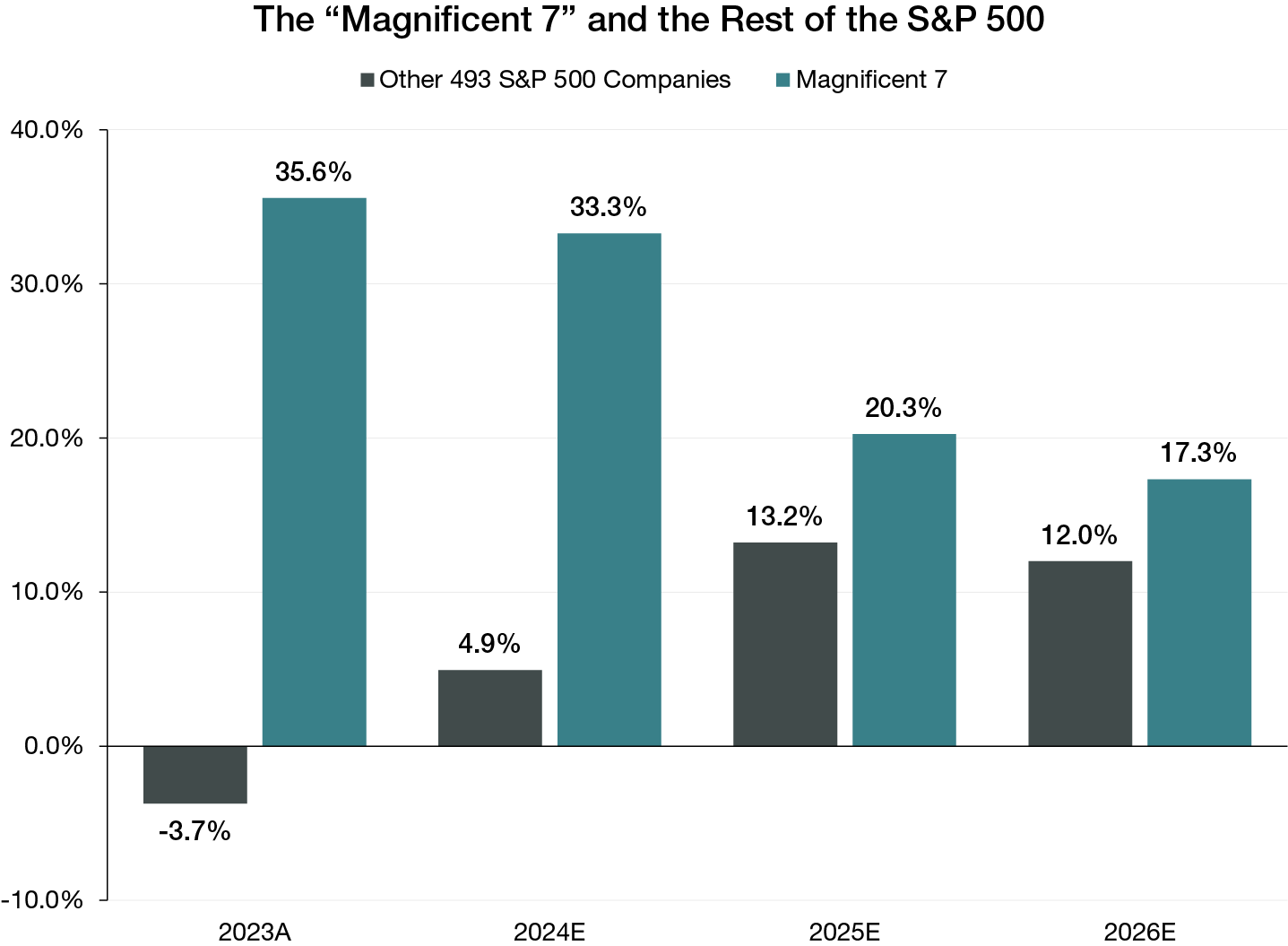
Figure 1. Strong Earnings Growth Increases Potential Opportunities in Equities 

Actual and estimated year-over-year earnings growth rates of indicated segments of the S&P 500® Index as of December 5, 2024

Bar Chart showing Actual and estimated year-over-year earnings growth rates of indicated segments of the S&P 500® Index
Source: FactSet and Bloomberg. Data as of December 5, 2024. A=actual. E=estimated. Large cap stocks represented by the Russell 1000® Index; mid caps, by the Russell Midcap® Index; and small caps by the Russell 2000® Index. “Magnificent 7” refers to mega-cap companies NVIDIA, Meta, Tesla, Amazon, Alphabet, Apple, and Microsoft. Earnings growth as measured by growth in net income.
Past performance is not a reliable indicator or guarantee of future results. The historical data shown in the chart above are for illustrative purposes only and do not represent any specific portfolio managed by Lord Abbett.

Addressing Valuation and Other Questions

Now, after two strong years in a row of equity market gains, consider the risks to the bull market continuing. There are many bricks in the wall of worry that could upend markets. Geopolitics, an acceleration in inflation, or an economic growth slowdown are three clear potential risks. While inflation, an economic growth slowdown, and geopolitical risks are legitimate concerns that warrant close monitoring and may create short-term volatility, we believe the long-term drivers of the equity bull market remain intact, as mentioned above. These positive forces suggest that equities can still offer attractive returns despite the potential risks.

The fourth risk worth mentioning is high valuation levels. The bearish valuation argument normally starts with a metric like price-to-earnings ratios today compared to the past 50 years in the market: at 21 times next year’s earnings, the S&P 500 is above its long-term average of around 17 times.

However, this simple comparison fails to consider a few ways the S&P 500 today is worth more now than before. Consider these observations:

  1. Asset-light businesses now comprise 50% of the S&P 500 compared to 20% in 1994, based on data from FactSet. Manufacturing businesses are now less than 20% of the index, down from 45%. Asset-light companies have more predictable and faster revenue growth, higher earnings growth, and higher margins.1
  2. The S&P 500 is now consistently growing faster than U.S. gross domestic product (GDP) by about 400 basis points. This was not always the case! From 1960-1995, the S&P 500 earnings grew about 200 bps slower than U.S. GDP growth.
  3. The cash flow generation and profitability of the S&P is at all-time highs: free cash flow and net income margins have steadily increased to surpass 10% in 2024.
  4. Capital returns to shareholders have improved dramatically. The return on equity of the S&P 500 has improved to 20% (up from 12% 50 years ago) and the combined dividends and share buybacks have increased from 25% of earnings 75% today.2

We think these points support the view that the market is worth more than it was in the past; the companies in the market today are much better. Therefore, investors should not be deterred from paying a premium to its historical average valuation.

Furthermore, valuation has historically been a poor predictor of future performance. Typically, market valuations tend to increase throughout the economic cycle until a recession occurs. At that point valuations contract. Therefore, we think investors should evaluate the factors that are driving the bull market (as laid out above) rather than a short-sighted study of valuation alone.