The Federal Reserve raised the target range for the federal funds rate by 25 basis points at its September meeting, marking the first increase since July 2023. But with markets increasingly anticipating the hike heading into the meeting, the decision itself may be less important than what policymakers signal about what comes next.
Is September the start of a hiking cycle or a one-time adjustment?
We do not view this as the start of an extended hiking cycle. The Fed characterized the move as supporting a “timelier” return to its 2% inflation goal, suggesting that the path from here will depend largely on the evolution of underlying inflation.
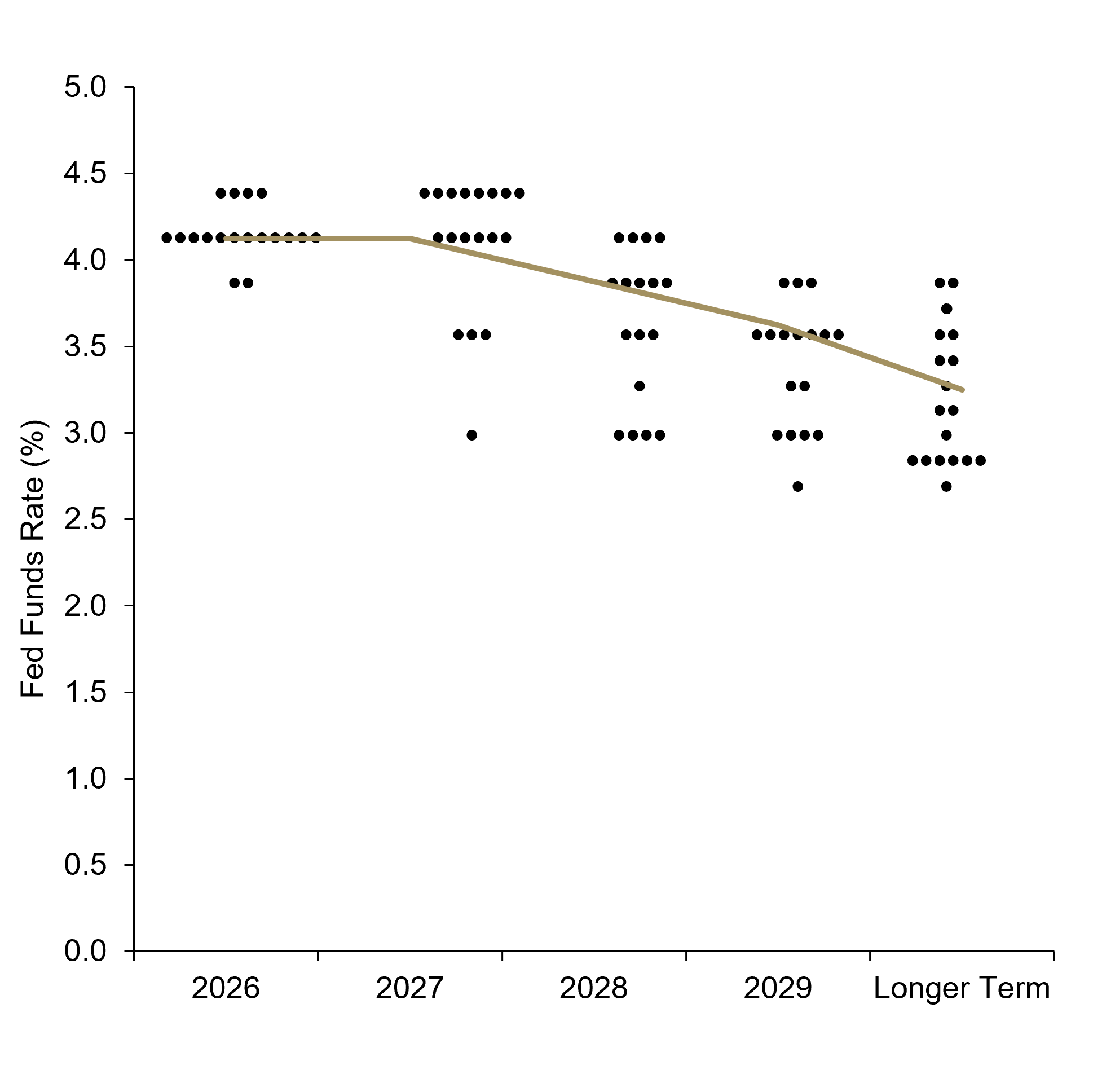
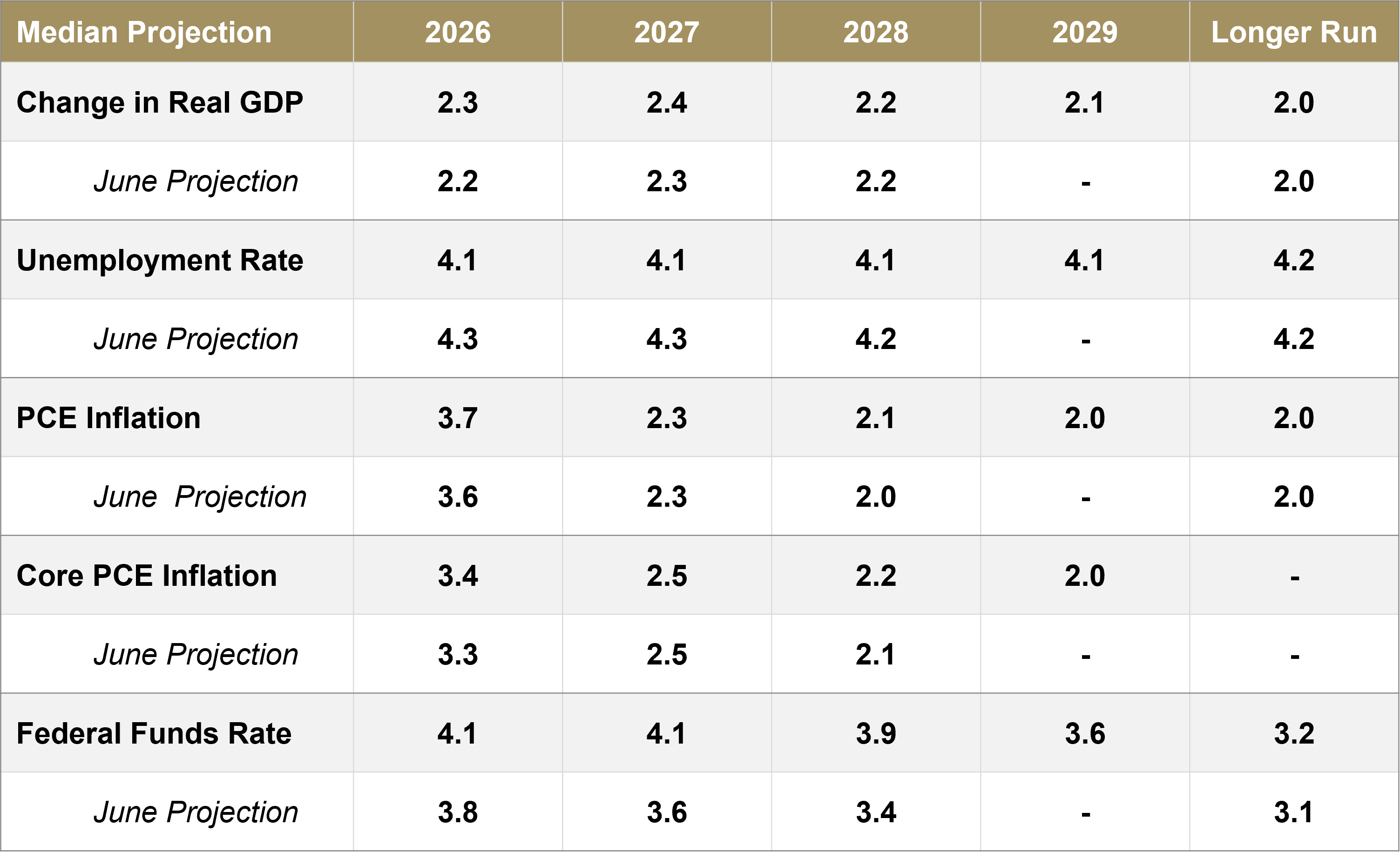
While Chair Warsh provided little explicit forward guidance, the updated projections offer some insight into how other FOMC participants see the path ahead. The median projection points to one additional 25-basis-point hike by year-end, followed by no further increase in 2027, although there remains meaningful dispersion among individual participants.
Markets are pricing a more aggressive path. Fed funds futures currently imply roughly three additional 25-basis-point hikes over the next year, according to Bloomberg—considerably more tightening than suggested by the median FOMC projection. That gap between market pricing and policymakers’ projections will be important to watch as incoming inflation data shape expectations for the path of rates.
What does the new dot plot tell us about the dispersion of views within the FOMC?
The September dot plot includes projections from 18 participants, as Chair Warsh continues to refrain from submitting his own forecast. While the median projection points to one additional 25-basis-point hike this year, four participants see two additional hikes as appropriate.
The range of views widens considerably beginning in 2027, with participants divided between rate cuts, holding policy steady, and further tightening. That dispersion highlights the uncertainty around the path of policy beyond the next several meetings. Also notable, the median longer-run federal funds rate edged higher to 3.25%, from 3.1% in June.
We believe, however, that the dot plot may carry less signaling power under a Warsh-led Fed. Given Chair Warsh’s skepticism about the usefulness of individual rate projections—and his decision not to submit one—the dots may be better viewed as a measure of the range of views within the FOMC than as explicit guidance about the future path of rates.